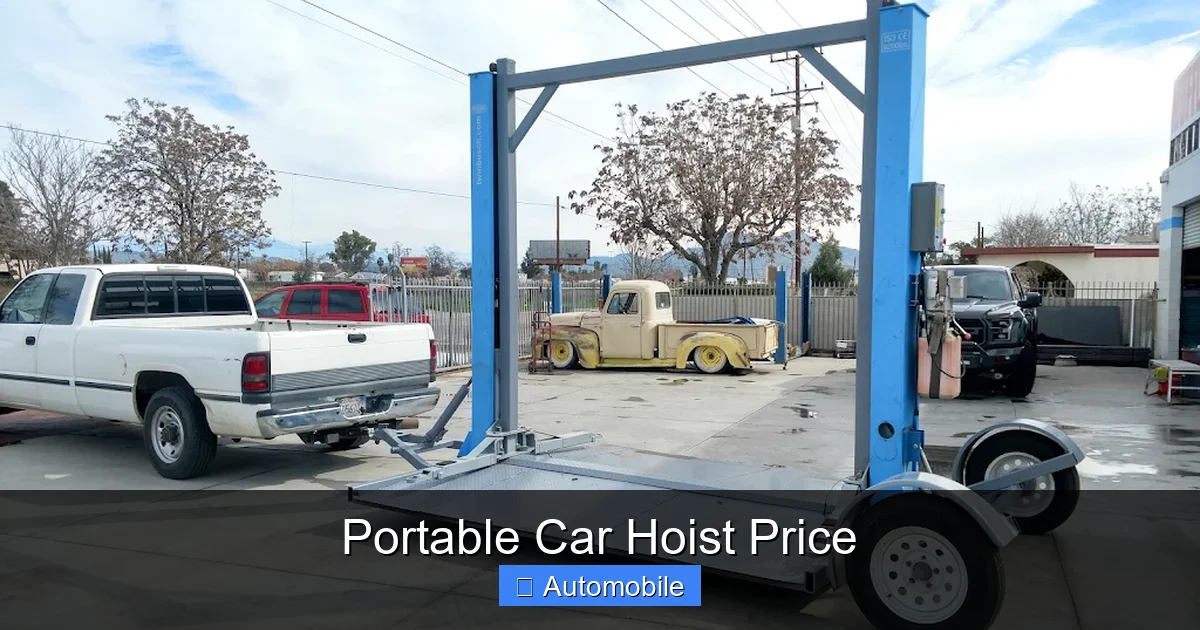
When considering a portable car hoist, understanding the diverse pricing landscape is crucial. Prices can range from a few hundred dollars for basic models to over $10,000 for professional-grade units, influenced by factors like lift capacity, height, brand, and safety features. Making an informed decision involves balancing your budget with your specific needs, prioritizing safety, and considering long-term value beyond the initial purchase price.
Ever dreamed of tackling car repairs with ease, without the backache of crawling on the garage floor or the expense of taking your vehicle to a professional shop for every minor fix? A portable car hoist might just be the game-changer you need. These incredibly versatile tools bring the convenience of a professional automotive lift right into your home garage or workshop, transforming your DIY capabilities and making maintenance tasks safer, faster, and much more comfortable.
But let’s be real, investing in a piece of equipment like this brings up one big question: what about the portable car hoist price? It’s not a one-size-fits-all answer, and understanding the cost means diving into a world of different models, capacities, and features. From entry-level solutions perfect for the weekend warrior to robust systems built for heavy-duty professional use, the price tag can vary quite dramatically. Don’t worry, we’re here to guide you through the maze, helping you understand what drives these prices and how to find the perfect hoist that fits both your needs and your wallet.
In this comprehensive guide, we’ll break down everything you need to know about the cost of portable car hoists. We’ll explore the different types available, delve into the key factors that influence their pricing, give you a realistic idea of what to expect in various price ranges, and even touch on those hidden costs you might not have considered. Our goal is to empower you with the knowledge to make an informed decision, ensuring your investment enhances your automotive journey for years to come without any nasty surprises.
Key Takeaways
- Price Range Varies Widely: Portable car hoist prices can span from approximately $800 for entry-level models to $10,000+ for heavy-duty, professional-grade systems, depending heavily on features and specifications.
- Key Price Drivers: Factors like lift capacity (how much weight it can lift), maximum lift height, brand reputation, included safety features, construction quality, and specific type (e.g., Quick Jack, mid-rise scissor) significantly impact the overall cost.
- Beyond the Sticker Price: Always account for potential additional costs such as shipping, specialized electrical requirements, accessories, and future maintenance, which can add to the total investment.
- Different Types, Different Costs: Entry-level options like some Quick Jack systems or smaller scissor lifts are more budget-friendly, while single-post or movable two-post hoists designed for heavier vehicles or professional use command higher price points.
- Safety is Paramount: Never compromise on safety features to save money. Hoists with robust safety locks, overload protection, and recognized certifications are crucial, often reflected in a slightly higher but justified price.
- Assess Your Needs First: Before focusing on price, clearly define your intended use – the type of vehicles, the frequency of use, available space, and required lift height – to narrow down suitable options and avoid overspending or underbuying.
Quick Answers to Common Questions
How much does a basic portable car hoist cost?
A basic portable car hoist, like an entry-level Quick Jack system, typically costs between $800 and $1,500, offering good value for light-duty home use.
What is the average price for a mid-range portable car hoist?
Mid-range portable car hoists, such as quality mid-rise scissor lifts or higher-capacity Quick Jacks, usually fall into the $2,500 to $5,000 price bracket, offering more features and capacity.
Do portable car hoists require special electrical outlets?
Most portable car hoists run on a standard 120V household outlet, but heavier-duty models may require a 220V dedicated circuit, potentially adding to installation costs.
Are shipping costs included in the portable car hoist price?
No, shipping costs are typically separate and can be significant due to the weight and size of hoists. Always confirm shipping fees before purchasing.
Is it worth spending more on a portable car hoist for safety features?
Absolutely. Investing in a hoist with robust safety features like automatic locking mechanisms and overload protection is paramount for preventing accidents and protecting both you and your vehicle.
📑 Table of Contents
What Exactly Is a Portable Car Hoist?
Before we talk about portable car hoist price, let’s clarify what we mean by a “portable” hoist. Unlike permanent, bolted-down lifts you often see in commercial garages, a portable car hoist is designed for mobility. This means it can be moved around your garage, stored away when not in use, or even transported to different locations if needed. This flexibility is a huge advantage for many homeowners and small workshops with limited space or for those who don’t want a permanent fixture altering their garage layout.
Defining Portability in Hoists
The term “portable” can mean different things depending on the type of hoist. For some, it might mean a system that can be quickly set up and taken down, like a “Quick Jack.” For others, it could refer to a heavier, wheeled lift that can be rolled to different bays but still requires a fair bit of effort to relocate. The key is that it’s not fixed in one spot by concrete anchors, offering a level of adaptability that traditional lifts simply can’t match.
Types of Portable Car Hoists
The variety of portable hoists on the market also plays a significant role in determining the portable car hoist price. Each type offers different capabilities and comes with its own set of advantages and price points:
- Scissor Lifts (Mid-Rise & Low-Rise): These are very popular for home garages due to their relatively compact footprint. They lift a vehicle using a scissor-like mechanism. Mid-rise scissor lifts typically raise a car about 2-4 feet off the ground, making them great for tire changes, brake jobs, and undercarriage inspections. Low-rise versions offer less lift but are even more compact.
- Quick Jack Systems: Often considered the epitome of portable lifting, Quick Jacks consist of two separate frame assemblies that slide under the vehicle. They offer quick setup, good ground clearance, and are easy to store. They’re excellent for basic maintenance and track-day use.
- Single-Post Lifts (Movable): While many single-post lifts are permanent, there are movable versions designed for portability. These offer excellent access to the vehicle’s underside and usually have higher lift capacities and heights than scissor lifts or Quick Jacks, but they require more space.
- Movable Two-Post Lifts: Less common in a truly portable sense, but some lighter-duty two-post lifts are designed to be moved. These offer superior undercarriage access, similar to commercial lifts, but their “portability” is relative, usually involving heavy-duty casters and some effort to relocate.
The Main Factors Influencing Portable Car Hoist Price
When you start looking at the portable car hoist price, you’ll quickly notice a wide range. What accounts for these differences? Several key factors contribute to the overall cost:
Visual guide about Portable Car Hoist Price
Image source: portablemobility.com.au
Lift Capacity (Weight Rating)
This is arguably the most significant factor. How much weight can the hoist safely lift? Hoists designed for smaller sedans will be less expensive than those built to handle heavy-duty trucks, SUVs, or even commercial vans. Common capacities range from 3,500 lbs to 10,000 lbs or more. A higher capacity requires more robust materials, stronger hydraulics, and more complex engineering, all of which drive up the portable car hoist price.
Lift Height and Reach
How high off the ground can the hoist raise your vehicle? Low-rise lifts are cheaper than mid-rise, and mid-rise lifts are typically less expensive than full-rise lifts that allow you to stand comfortably underneath the car. The reach (how far under the vehicle the lift points extend) can also influence the design and cost, especially for hoists designed to accommodate longer or wider vehicles.
Power Source (Electric, Air/Hydraulic)
Most portable hoists are electrically powered, often requiring a standard 120V outlet, though some heavier-duty models might need 220V. Hydraulic systems, which are common, are typically powered by an electric motor driving a hydraulic pump. The quality and power of the motor and pump will affect the portable car hoist price. Some professional-grade systems might also incorporate air-over-hydraulic components.
Brand Reputation and Warranty
Just like with cars or power tools, the brand matters. Reputable brands like BendPak (QuickJack), Challenger Lifts, MaxJax, or Atlas often command a higher portable car hoist price, but they typically offer superior build quality, better customer support, and more comprehensive warranties. A strong warranty can save you money and headaches down the road if something goes wrong.
Safety Features and Certifications
Safety should never be compromised. Hoists with advanced safety features, such as automatic safety locks, overload protection, descent speed control, and emergency stop buttons, will naturally cost more. Furthermore, hoists that are certified by recognized safety standards organizations (like ANSI/ALI) indicate rigorous testing and adherence to high safety benchmarks, which also contributes to their portable car hoist price.
Material Quality and Construction
The type and gauge of steel used, the quality of welds, and the durability of components like hydraulic cylinders, hoses, and electrical wiring all play a role. Premium materials and robust construction ensure longevity and reliability, but they also increase manufacturing costs and, consequently, the portable car hoist price.
Additional Features and Accessories
Things like integrated casters for easier movement, rubber lifting blocks, drip trays, specialized adapters for different vehicles, and even remote controls can add to the base price. While some accessories are optional, many are essential for safe and convenient operation.
Portable Car Hoist Price Ranges: What to Expect
Let’s talk numbers. The portable car hoist price spectrum is broad, but we can generally categorize it into a few distinct tiers:
Entry-Level Options (Budget-Friendly: $800 – $2,500)
In this range, you’ll typically find basic Quick Jack systems (like the BendPak BL-3500 or BL-5000 models), smaller low-rise scissor lifts, or very basic portable ramp systems. These are excellent for the DIY enthusiast who primarily works on lighter vehicles (sedans, smaller SUVs) and needs to perform tasks like tire rotations, oil changes, or brake jobs. They offer a significant upgrade over jack stands and floor jacks but usually have lower lift heights and capacities. The portability is often highest in this category.
Example: A QuickJack BL-5000SLX system, offering 5,000 lbs capacity and a lift height of around 21 inches, typically falls into the $1,500-$2,000 range, depending on sales and included accessories. This portable car hoist price provides immense value for its convenience and safety.
Mid-Range Versatility (DIY Enthusiast & Small Shop: $2,500 – $5,000)
Stepping up, this segment offers more robust Quick Jack models (e.g., higher capacity versions), mid-rise scissor lifts, and some entry-level movable single-post lifts. These hoists provide greater lift heights, higher capacities (often 6,000-7,000 lbs), and more durable construction. They are suitable for more frequent use, a wider range of vehicles (including light trucks), and more involved repairs that require better undercarriage access.
Example: A quality mid-rise scissor lift with a 6,000 lbs capacity and 48-inch lift height could cost between $3,000-$4,500. This portable car hoist price reflects increased power, better components, and enhanced safety features compared to the entry-level options.
Professional-Grade Investment (Serious Hobbyist & Commercial Use: $5,000 – $10,000+)
At the higher end, you’ll find heavy-duty portable scissor lifts, movable single-post lifts, and the more robust movable two-post systems designed for frequent, demanding use in professional settings or for serious home enthusiasts with diverse vehicle fleets. These hoists boast impressive lift capacities (often 7,000-10,000+ lbs), full-rise capabilities, superior build quality, advanced safety mechanisms, and extensive warranties. The higher portable car hoist price here is justified by durability, performance, and the ability to handle almost any vehicle.
Example: A portable single-post lift with a 7,000-9,000 lbs capacity, offering full-rise access, might start around $6,000 and go upwards of $9,000 or more, especially from top-tier brands. A truly movable two-post lift system can push well beyond $8,000. These price points reflect heavy-duty construction, industrial-grade components, and often, more complex hydraulic systems.
Beyond the Sticker Price: Hidden Costs and Long-Term Value
When budgeting for a portable car hoist, it’s crucial to look beyond the initial purchase price. Several other factors can add to the total investment:
Shipping and Installation
Portable hoists are heavy! Shipping costs can be substantial, especially for larger units or if you live in a remote area. While “installation” for a portable hoist is usually just setup, it might involve moving heavy components or connecting hydraulic lines, which could be cumbersome for one person. Some larger units might offer professional setup services, adding to the cost.
Power Requirements and Electrical Upgrades
While many portable hoists run on standard 120V outlets, some more powerful units might require a dedicated 220V circuit. If your garage isn’t already wired for this, you’ll need to factor in the cost of an electrician to install a new circuit and outlet, which can easily add several hundred dollars to your total portable car hoist price.
Maintenance and Replacement Parts
Like any mechanical equipment, hoists require maintenance. This includes checking hydraulic fluid levels, inspecting hoses, and ensuring all safety mechanisms are functioning correctly. While maintenance costs are generally low, it’s worth considering the availability and price of replacement parts (e.g., rubber pads, hydraulic seals) for your chosen brand and model.
Resale Value
A high-quality portable hoist from a reputable brand will generally hold its value better than a generic, low-cost option. If you ever decide to upgrade or sell it, a well-maintained, recognized brand will likely fetch a better resale price, recovering some of your initial investment.
The Cost of Safety (or lack thereof)
This isn’t a “hidden cost” in the traditional sense, but it’s a critical consideration. Choosing a cheaper hoist that lacks essential safety features or is made from questionable materials can have devastating consequences. The cost of an accident – injury, vehicle damage, or worse – far outweighs any savings from buying a sub-par product. Always prioritize safety over the lowest portable car hoist price.
Is a Portable Car Hoist Worth the Investment? Tips for Choosing Wisely
For many, a portable car hoist is an invaluable tool that quickly pays for itself in saved mechanic fees, increased convenience, and improved safety. The satisfaction of doing your own work with the right equipment is also a huge bonus. But how do you ensure you’re making a wise investment?
Assess Your Needs (Vehicle Type, Work Frequency, Space)
- What vehicles will you lift? Match the hoist’s capacity to the heaviest vehicle you own or plan to work on. Don’t underestimate.
- How often will you use it? Occasional use might justify an entry-level Quick Jack, while frequent, heavy-duty work might warrant a mid-range scissor or single-post lift.
- What’s your available space? Measure your garage ceiling height, floor space, and even the width of your garage door. Some hoists require more clearance than others.
- What types of repairs? If you primarily do tire rotations, a low-profile hoist is fine. For engine drops or transmission work, you’ll need a full-rise lift.
Prioritize Safety
Look for hoists with robust locking mechanisms, redundant safety systems, and durable construction. Check for third-party certifications (like ALI/ANSI) if available for your chosen type. Never skimp on safety to save a few dollars on the portable car hoist price.
Read Reviews and Compare Models
Do your homework! Read reviews from other users and watch demonstration videos. Compare features, specifications, and warranties across different brands and models within your target price range. Pay attention to comments about ease of use, reliability, and customer service.
Consider the Warranty and Support
A good warranty (e.g., 1-5 years on parts, sometimes longer on structure) is a sign of manufacturer confidence. Also, check the availability of replacement parts and technical support. Good post-purchase support can be invaluable.
Don’t Compromise on Quality for Price
While it’s tempting to go for the cheapest option, remember that a portable car hoist is a long-term investment in your safety and productivity. A slightly higher portable car hoist price for a well-built, reliable, and safe unit will almost always be worth it in the long run.
Conclusion
The portable car hoist price is as varied as the hoists themselves, reflecting a complex interplay of capacity, lift height, brand reputation, safety features, and construction quality. From budget-friendly Quick Jacks ideal for quick tasks to professional-grade movable single-post lifts designed for comprehensive repairs, there’s a solution for almost every need and budget.
By understanding the factors that influence the cost, considering potential hidden expenses like shipping or electrical upgrades, and prioritizing safety above all else, you can navigate the market with confidence. A portable car hoist is more than just a tool; it’s an investment in your safety, efficiency, and the satisfaction of working on your own vehicle. Choose wisely, and you’ll enjoy the benefits of having your own lift for years to come.
🎥 Related Video: Effortless Vehicle Lifting | Sealey CLM2250 Portable Car Lift in Action
📺 Sealey Tools
The Sealey transportable lifting system makes total vehicle access easier than ever. Key Features include: ✓ Lightweight …
Frequently Asked Questions
What factors primarily determine a portable car hoist’s price?
The main factors are lift capacity (how much weight it can lift), maximum lift height, the hoist’s type (e.g., Quick Jack vs. scissor lift), the brand’s reputation, and the number and quality of safety features included. Higher capacities and greater lift heights typically result in a higher price.
Can I find a portable car hoist for under $1,000?
It’s possible to find some very basic, low-capacity portable car hoists or small Quick Jack models (often during sales) for slightly under $1,000. However, for a reliable and durable unit with decent capacity, budgeting closer to $1,000-$1,500 is more realistic.
Are there any ongoing costs associated with owning a portable car hoist?
Yes, ongoing costs are generally low but can include hydraulic fluid top-ups, occasional replacement of rubber lifting pads, and electricity usage for the pump. Larger, more complex units might require more frequent checks or specific maintenance items.
How does a portable car hoist compare in price to a permanent two-post lift?
Portable car hoists are generally less expensive than permanent two-post lifts. Permanent two-post lifts typically start around $3,000-$4,000 and can go much higher, plus they require professional installation and a dedicated concrete slab, adding significant cost and reducing flexibility.
What warranty should I look for when buying a portable car hoist?
A good warranty for a portable car hoist usually includes at least 1-2 years on parts and often 3-5 years or more on the structural components. Reputable brands often offer better warranties and more readily available parts, which is a strong indicator of quality.
Does the brand name significantly affect the portable car hoist price?
Yes, brand name plays a significant role. Well-established brands known for quality, safety, and customer support, such as BendPak (QuickJack) or MaxJax, often have higher price points than lesser-known or generic brands. This premium typically reflects better materials, engineering, testing, and after-sales service.