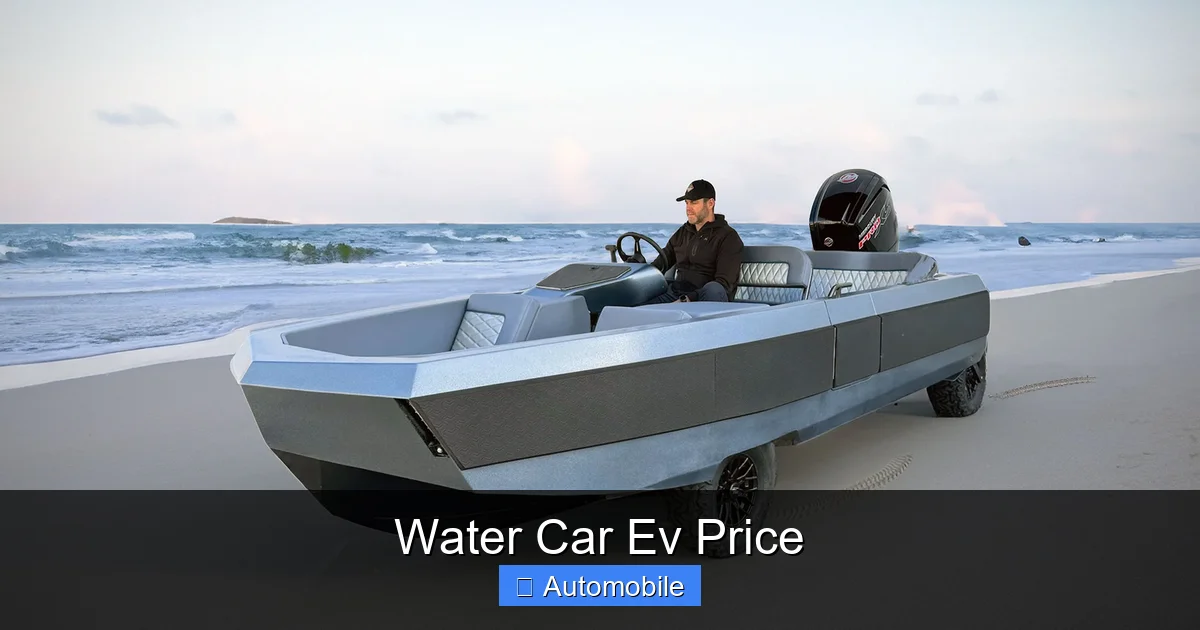
The concept of a “water car” running solely on water is a persistent myth, as scientific principles dictate it’s not a viable fuel source for vehicles. When people search for “water car EV price,” they are often thinking about advanced, eco-friendly vehicles. This article clarifies that hydrogen Fuel Cell Electric Vehicles (FCEVs), which emit water vapor and can use hydrogen derived from water, are the closest reality, and we’ll explore their pricing alongside general EV costs.
Ah, the “water car.” It’s a phrase that conjures images of futuristic vehicles, gliding silently down roads, leaving nothing but clean water vapor in their wake. For decades, the idea of a car running purely on water has captured the public’s imagination, promising endless, free, and environmentally friendly transportation. If you’ve found yourself searching for “water car EV price,” you’re likely among many who are curious about this fascinating, albeit often misunderstood, concept.
The truth, however, is a little more grounded in reality. While the dream of a car running directly on water is a scientific impossibility based on current understanding of physics and energy, there’s a fascinating intersection between this idea and the world of electric vehicles (EVs). We’re talking about hydrogen fuel cell electric vehicles (FCEVs), which, while not running *on* water, do use hydrogen that can be derived from water, and their only emission is pure water vapor. So, let’s dive deep into demystifying the “water car,” exploring the real-world technologies that come closest to this vision, and, crucially, understanding the pricing landscape for these innovative EVs.
In this comprehensive guide, we’ll separate fact from fiction, shed light on the technologies pushing the boundaries of clean mobility, and give you a clear picture of what to expect regarding the “water car EV price” – or rather, the price of real-world electric vehicles that offer a glimpse into that sustainable future. Get ready to explore the exciting, and sometimes complex, world of advanced vehicle propulsion.
Key Takeaways
- “Water Car” is a Myth: No commercially viable vehicle runs directly on water as its sole fuel source; this concept lacks scientific basis and violates fundamental laws of physics concerning energy creation.
- Hydrogen FCEVs are the Closest Reality: Fuel Cell Electric Vehicles (FCEVs) use hydrogen to generate electricity, emitting only water vapor. Hydrogen can be produced from water, making FCEVs the closest practical link to the “water car” idea, though water is a byproduct or source, not the direct fuel.
- FCEV Pricing is Premium: Current FCEVs like the Toyota Mirai and Hyundai Nexo typically range from $50,000 to $70,000 before incentives, reflecting advanced technology and limited production.
- BEV Pricing Varies Widely: Battery Electric Vehicles (BEVs) offer a broad price range, from entry-level models around $30,000 to luxury options exceeding $100,000, influenced by battery size, range, and features.
- Incentives Significantly Reduce Costs: Government tax credits, rebates, and grants for FCEVs and BEVs can substantially lower the effective purchase price, making them more accessible.
- Total Cost of Ownership Matters: Beyond the initial “water car EV price” or FCEV/BEV sticker price, factors like fuel/charging costs, maintenance, and potential resale value contribute to the overall economic picture.
Quick Answers to Common Questions
Question 1?
What is a “water car” in the context of real vehicles?
Answer 1?
A true “water car” that runs solely on water as its fuel source does not exist commercially due to scientific limitations. However, hydrogen Fuel Cell Electric Vehicles (FCEVs) are the closest reality, as they use hydrogen (which can be derived from water) and emit only water vapor.
Question 2?
Are FCEVs expensive?
Answer 2?
Yes, FCEVs currently have a premium price tag, typically ranging from $50,000 to $70,000 before any government incentives. This is due to advanced technology, limited production, and high R&D costs.
Question 3?
Do FCEVs qualify for government incentives?
Answer 3?
Yes, in many regions, FCEVs qualify for significant federal and state tax credits, rebates, and even free hydrogen fuel credits, which can substantially reduce the effective purchase price and overall cost of ownership.
Question 4?
How does FCEV pricing compare to mainstream BEVs?
Answer 4?
FCEVs are generally priced higher than most mainstream Battery Electric Vehicles (BEVs). While BEVs have a wide price range, many popular models fall into the $30,000 to $65,000 range, which is often lower than the entry point for most FCEVs.
Question 5?
What is the main challenge for FCEV adoption?
Answer 5?
The primary challenge for FCEV adoption is the lack of widespread hydrogen refueling infrastructure. Refueling stations are very limited, making FCEVs practical only in specific geographic areas where stations are available.
📑 Table of Contents
Demystifying the “Water Car” Myth
Let’s address the elephant in the garage right away: a car that runs *solely* on water as its fuel source, generating its own power from H2O with no external energy input, is a myth. This is not to say that water isn’t incredibly important in some advanced vehicle systems, but the idea of pouring a glass of tap water into a tank and driving off into the sunset indefinitely simply doesn’t align with the fundamental laws of physics.
The Fundamental Energy Challenge
The core issue boils down to the law of conservation of energy. To break water (H2O) into its constituent elements, hydrogen (H2) and oxygen (O2)—a process called electrolysis—requires a significant amount of energy. If you then recombine the hydrogen and oxygen to produce energy (say, in an engine or a fuel cell), you will always get less energy out than what you put in to split the water initially. This is a basic principle of thermodynamics: you can’t create energy from nothing, nor can you get more energy out of a system than you put into it. So, while you can technically extract hydrogen from water, you need an external energy source (like solar, wind, or grid electricity) to do it efficiently.
Historical Claims and Reality Checks
Over the years, various inventors have claimed to have developed engines that run on water, or “water car” technologies. These claims often gain significant media attention due to the allure of free energy. However, upon scientific scrutiny, these devices typically turn out to be either hoaxes, misunderstandings of basic science, or simply inefficient ways of burning conventional fuels with water as an additive (which might slightly improve emissions or efficiency but doesn’t make water the primary fuel). The key takeaway here is that if someone offers you a “water car” that creates its own energy from water, it’s best to approach it with extreme skepticism. Understanding the real “water car EV price” means understanding what’s actually possible.
Hydrogen Fuel Cell Vehicles (FCEVs) – The Closest Link
While the pure “water car” remains in the realm of science fiction, hydrogen Fuel Cell Electric Vehicles (FCEVs) are the closest real-world technology that touches upon the theme of water. These vehicles represent a fascinating branch of electric mobility, offering a different approach to zero-emission driving compared to battery electric vehicles (BEVs).
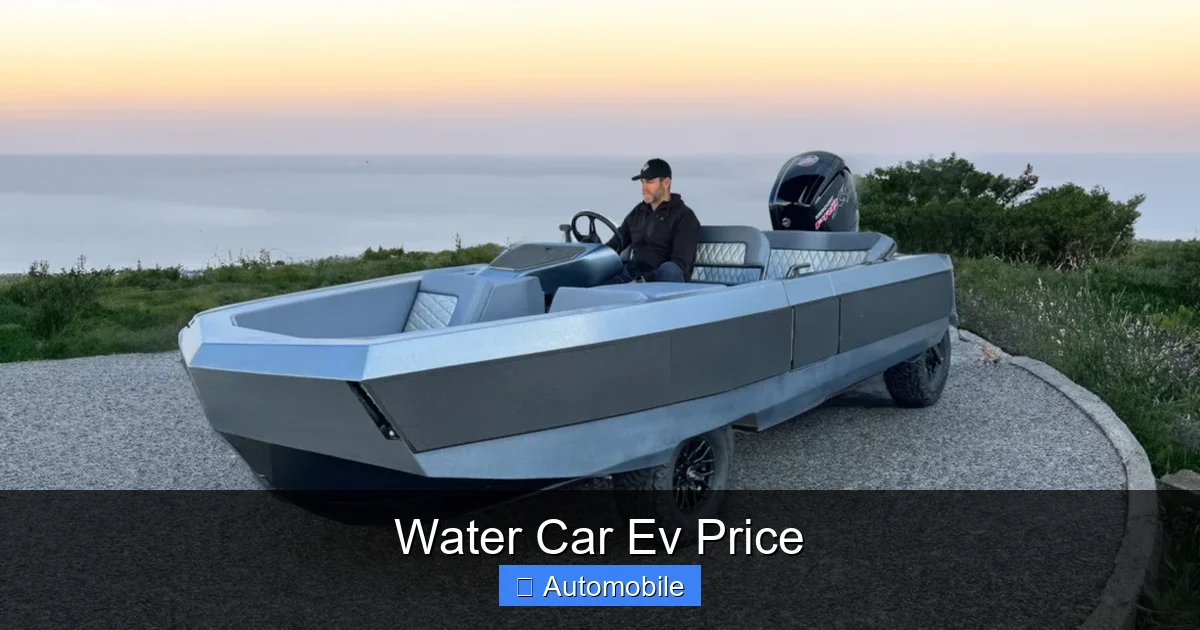
Visual guide about Water Car Ev Price
Image source: superinnovators.com
How FCEVs Turn Hydrogen into Power
An FCEV doesn’t “burn” hydrogen like a traditional engine burns gasoline. Instead, it uses a fuel cell stack as its power generator. Here’s the simplified magic:
- Hydrogen gas (H2), stored in high-pressure tanks, enters the fuel cell.
- Oxygen (O2) from the air also enters the fuel cell.
- Inside the fuel cell, a chemical reaction occurs where hydrogen and oxygen combine across a special membrane. This reaction generates electricity, which powers an electric motor to drive the wheels.
- The only byproduct of this reaction is pure water vapor (H2O), which exits the tailpipe.
This process is incredibly clean, making FCEVs zero-emission vehicles at the tailpipe. The “water car EV price” discussion often implicitly includes FCEVs because of their unique relationship with water.
Water as a Byproduct, Not Fuel
It’s crucial to distinguish: FCEVs run on hydrogen, not directly on water. However, water plays two significant roles:
- Byproduct: As mentioned, water vapor is the only emission from an FCEV, making it exceptionally clean.
- Source of Hydrogen: A significant amount of hydrogen used today is produced through electrolysis of water, often powered by renewable energy sources (this is known as “green hydrogen”). So, while the car isn’t drinking water, its fuel can ultimately come from water, closing a very clean loop.
This makes FCEVs a highly relevant part of the “water car EV price” conversation, as they are the closest commercially available technology to the idealized water-powered vehicle.
Understanding FCEV Pricing
Now that we understand what FCEVs are, let’s get down to the “water car EV price” when it comes to these hydrogen-powered machines. It’s important to note that FCEVs are still a niche market compared to BEVs, with fewer models available and a limited refueling infrastructure in most regions.
Current FCEV Models and Their Costs
Globally, only a handful of FCEV models are commercially available, primarily in regions with developing hydrogen refueling networks (like California in the US, parts of Europe, and Japan/South Korea). The two most prominent passenger FCEVs are:
- Toyota Mirai: The second generation of this sleek sedan offers impressive range and a refined driving experience. Prices for a new Toyota Mirai typically start in the range of $50,000 to $55,000 USD. Higher trims can push this closer to $70,000.
- Hyundai Nexo: This fuel cell SUV provides more practicality and a longer range. The Hyundai Nexo usually starts around $60,000 USD, with fully equipped versions reaching upwards of $65,000.
These prices reflect cutting-edge technology, limited production volumes, and the specialized components required for hydrogen storage and fuel cell operation. For those looking for a “water car EV price,” these figures represent the current reality for the most advanced hydrogen vehicles.
Factors Influencing FCEV Prices
Several factors contribute to the relatively premium pricing of FCEVs:
- Research & Development Costs: Developing fuel cell technology is incredibly complex and expensive. These costs are amortized over fewer vehicles, leading to higher individual unit prices.
- Production Volume: FCEVs are produced in much smaller numbers than conventional gasoline cars or even many BEVs. Lower economies of scale mean higher manufacturing costs per vehicle.
- Specialized Components: High-pressure hydrogen storage tanks, the fuel cell stack itself, and the intricate hydrogen management systems are advanced and costly to produce.
- Limited Infrastructure: The nascent hydrogen refueling infrastructure means less widespread adoption, which in turn keeps production volumes low and prices high.
The “water car EV price” for an FCEV is a reflection of these technological and market realities.
The Role of Incentives and Subsidies
Just like with BEVs, governments often offer significant incentives to encourage the adoption of FCEVs. These can drastically reduce the effective “water car EV price” for consumers. For example, in California, the Toyota Mirai often qualifies for federal tax credits (e.g., up to $8,000) and state rebates (e.g., $4,500), plus a significant hydrogen fuel credit (e.g., $15,000 worth of free fuel over three years). These incentives can make the total cost of ownership much more competitive, sometimes bringing the effective purchase price down substantially.
General EV Pricing (BEVs) – What to Expect
While FCEVs are the closest to the “water car” concept due to their water emissions and hydrogen source, when most people search for “EV price,” they are usually thinking about Battery Electric Vehicles (BEVs). These are the fully electric cars powered by large rechargeable battery packs, and they dominate the current EV market. Let’s look at the price range you can expect for these mainstream EVs.
Entry-Level to Luxury BEVs
The BEV market has expanded dramatically, offering a vehicle for almost every budget:
- Entry-Level (Approx. $30,000 – $45,000): Models like the Chevrolet Bolt EV/EUV, Nissan Leaf, Hyundai Kona Electric, and Mini Cooper Electric fall into this category. They offer decent range for daily commuting and city driving, making electric ownership more accessible.
- Mid-Range (Approx. $45,000 – $65,000): This segment includes popular options such as the Tesla Model 3 and Model Y, Ford Mustang Mach-E, Hyundai Ioniq 5, Kia EV6, and Volkswagen ID.4. These vehicles offer a better balance of range, performance, and features, representing the sweet spot for many buyers considering an EV.
- Luxury & Performance (Approx. $65,000+): At the higher end, you’ll find vehicles like the Tesla Model S and Model X, Porsche Taycan, Audi e-tron, Mercedes-Benz EQS, BMW iX, Lucid Air, and Rivian R1T/R1S. These cars boast longer ranges, blistering performance, premium interiors, and cutting-edge technology.
Understanding this broad spectrum is key to deciphering the “water car EV price” in the context of general electric mobility.
Battery Costs and Technological Advancements
The battery pack is the single most expensive component in a BEV, often accounting for 30-40% of the vehicle’s total cost. However, battery technology is constantly evolving:
- Decreasing Costs: The cost per kilowatt-hour (kWh) of battery capacity has fallen dramatically over the past decade, making EVs more affordable. This trend is expected to continue.
- Improved Energy Density: Newer batteries pack more energy into a smaller, lighter package, leading to longer ranges without proportional increases in vehicle size or weight.
- New Chemistries: Research into solid-state batteries and other advanced chemistries promises even greater safety, faster charging, and lower costs in the future.
These advancements directly impact the “water car EV price” for battery-powered vehicles, pushing them towards price parity with internal combustion engine (ICE) cars.
Impact of Demand and Production Scalability
As demand for BEVs grows, manufacturers are ramping up production, leading to greater economies of scale. This increased production, coupled with competition among automakers, is helping to drive prices down across various segments. More models entering the market also means more choice and competitive pricing, benefiting consumers looking for an EV.
The True Cost of Ownership: FCEV vs. BEV vs. ICE
When you consider the “water car EV price” or any vehicle’s cost, the sticker price is just one piece of the puzzle. The true cost of ownership (TCO) includes factors like fuel/electricity, maintenance, insurance, and depreciation. Let’s compare FCEVs, BEVs, and traditional Internal Combustion Engine (ICE) vehicles.
Fueling Up: Hydrogen vs. Electricity vs. Gasoline
- Hydrogen (FCEV): Hydrogen fuel is sold by the kilogram. Prices can vary, but generally, a kilogram of hydrogen costs roughly $12-$18. With a Toyota Mirai getting about 70-75 miles per kilogram, this translates to a per-mile cost comparable to a gasoline car getting around 30-35 MPG with gas at $4-$5/gallon. However, many FCEVs come with significant fuel credits (e.g., $15,000 worth over three years), which effectively makes “fuel” free for that period.
- Electricity (BEV): Charging costs depend on your electricity rates and whether you charge at home or use public fast chargers. Home charging is generally the cheapest, often equating to a per-mile cost significantly lower than gasoline, especially if you charge during off-peak hours. Public fast charging is more expensive but still often cheaper than gasoline.
- Gasoline (ICE): Prices fluctuate widely, but gasoline cars are consistently among the most expensive to fuel, especially larger vehicles or those with poor fuel economy.
When looking at “water car EV price” from a TCO perspective, the fuel savings of FCEVs (with credits) and BEVs are a major advantage.
Maintenance and Longevity Considerations
Both FCEVs and BEVs generally have lower maintenance costs than ICE vehicles. They have fewer moving parts, no oil changes, no spark plugs, and regenerative braking reduces wear on traditional brake pads.
- FCEVs: Still relatively new, but generally lower maintenance than ICE. The fuel cell stack and hydrogen tanks are built for longevity.
- BEVs: Very low maintenance. Battery packs are warrantied for many years (typically 8 years/100,000 miles), and electric motors are incredibly durable.
- ICE: Requires regular oil changes, filter replacements, spark plug changes, belt replacements, and more complex engine and transmission repairs.
The long-term “water car EV price” benefits from reduced maintenance for both FCEVs and BEVs.
Infrastructure Challenges and Opportunities
- Hydrogen Infrastructure: This is the biggest hurdle for FCEVs. Refueling stations are sparse, making FCEVs practical only in specific geographic areas. Expanding this infrastructure is a major, long-term undertaking.
- EV Charging Infrastructure: While much more developed than hydrogen, it still varies greatly by region. Home charging is convenient, but public fast-charging networks are crucial for long-distance travel. The infrastructure is rapidly expanding globally.
The current infrastructure limitations significantly influence the practicality and adoption rates of both FCEVs and BEVs, and thus their perceived “water car EV price” value.
Conclusion
The journey to understand “water car EV price” takes us through a fascinating landscape of myth, innovation, and practical realities. We’ve clarified that the dream of a car running purely on water is, for now, a scientific impossibility. However, the spirit of that dream lives on in the incredible advancements of electric vehicles.
Hydrogen Fuel Cell Electric Vehicles (FCEVs) like the Toyota Mirai and Hyundai Nexo are the closest realization of a “water car,” thanks to their water vapor emissions and the potential for hydrogen production from water. These vehicles, while still premium in price (often $50,000-$70,000 before incentives), represent a cutting-edge, zero-emission solution. Their pricing reflects advanced technology and limited production, though significant government incentives can greatly reduce the effective cost of entry.
Meanwhile, Battery Electric Vehicles (BEVs) dominate the current EV market, offering a wide range of prices from accessible entry-level models to luxurious, high-performance vehicles. With continuously falling battery costs, expanding charging infrastructure, and increasing model availability, the “EV price” for BEVs is becoming more competitive with traditional gasoline cars every year.
Ultimately, whether you’re considering an FCEV or a BEV, looking beyond the initial sticker price to the total cost of ownership reveals significant savings on fuel and maintenance compared to gasoline vehicles. While the “water car” in its mythical form remains out of reach, the real-world innovations in electric vehicles are steadily driving us towards a cleaner, more sustainable automotive future. The choice between an FCEV and a BEV will depend on your specific needs, location, and access to infrastructure, but both offer compelling pathways to emission-free driving.
🎥 Related Video: The WaterCar EV
📺 WaterCar Amphibious Vehicle Manufacturer
Frequently Asked Questions
Is a car that runs on water a real thing?
No, a car that runs purely on water as its fuel source, generating its own energy from H2O, is not a real thing in the commercial automotive market. This concept violates fundamental laws of physics regarding energy conservation.
What is the closest thing to a “water car” that actually exists?
The closest real-world vehicles to the “water car” concept are Hydrogen Fuel Cell Electric Vehicles (FCEVs). These cars use hydrogen fuel, generate electricity through a chemical reaction, and emit only water vapor as their byproduct.
How much does a hydrogen fuel cell car cost?
Current models of hydrogen fuel cell cars, such as the Toyota Mirai or Hyundai Nexo, typically have a starting price between $50,000 and $70,000 USD before any applicable government incentives or rebates.
Are there any incentives for buying a “water car” (FCEV)?
Yes, FCEVs often qualify for substantial federal tax credits, state rebates, and even multi-year fuel credits, which can significantly lower the effective purchase price and reduce the overall cost of ownership.
Why are hydrogen fuel cell vehicles more expensive than many battery EVs?
FCEVs are generally more expensive due to higher research and development costs, lower production volumes, and the specialized, advanced components required for hydrogen storage and fuel cell technology.
What are the running costs of a hydrogen fuel cell car compared to a gasoline car?
While hydrogen fuel itself can be costly (comparable to expensive gasoline), many FCEVs come with significant complimentary fuel programs for several years, making running costs very low during that period. FCEVs also generally have lower maintenance needs than gasoline cars.