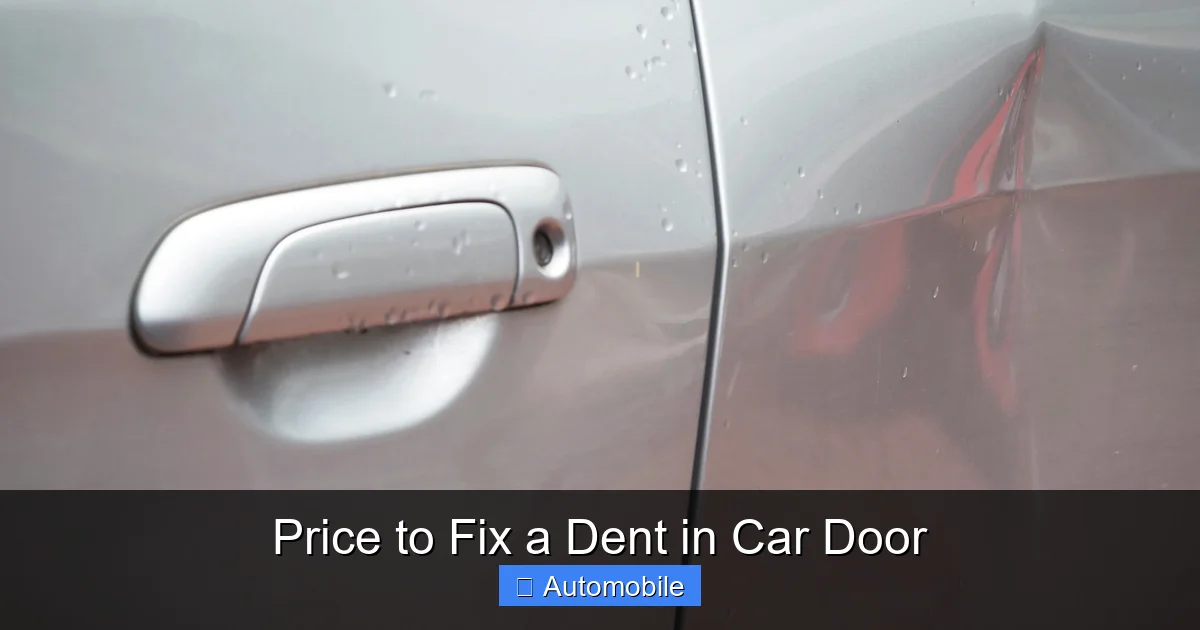
Discover the true price to fix a dent in your car door, which varies greatly based on the dent’s size, depth, location, and the chosen repair method. From cost-effective Paintless Dent Repair (PDR) to more involved traditional bodywork, understanding these factors helps you make an informed decision. Learn when to DIY and when to trust a professional for the best results, ensuring you get a fair price for a pristine finish.
There’s nothing quite like the sinking feeling you get when you discover a new dent on your car door. Maybe it was a rogue shopping cart, an accidental bump in a parking lot, or perhaps a hailstorm. No matter the cause, that unsightly blemish stands out, detracting from your car’s appearance and potentially its resale value. Your immediate thought is likely, “Oh no, how much is this going to cost me?”
Understanding the price to fix a dent in a car door can feel like navigating a maze. There isn’t one universal answer. The cost varies widely based on numerous factors, from the dent’s size and location to the specific repair method required. It can range from a quick, inexpensive fix to a significant investment, making it crucial to understand your options.
This comprehensive guide aims to demystify the process. We’ll explore the key factors influencing repair costs, dive into different repair techniques, weigh the pros and cons of DIY versus professional help, and provide practical tips to help you get the best price to fix a dent in your car door without compromising quality. By the end, you’ll be well-equipped to make an informed decision and get your car looking pristine again.
Key Takeaways
- Dent Characteristics are Key: The size, depth, location on the door, and type of dent (crease vs. ding) heavily influence the final repair price.
- PDR is Often Cheapest: Paintless Dent Repair (PDR) is typically the most affordable option for minor, shallow dents without paint damage, often costing under $250.
- Traditional Repair Costs More: Dents with chipped paint, sharp creases, or located on body lines usually require traditional bodywork, involving sanding, filling, and repainting, which can range from $300 to over $1,000.
- DIY Can Be Risky: Attempting DIY repairs with suction cups or puller kits can save money for very minor dents but carries the risk of worsening the damage if not done correctly, potentially increasing professional repair costs.
- Get Multiple Quotes: Always obtain at least three detailed quotes from reputable auto body shops to compare prices, repair methods, and ensure you’re getting a fair deal.
- Consider Your Insurance Deductible: For minor dents, the repair cost might be less than your insurance deductible, making it more economical to pay out-of-pocket rather than filing a claim that could impact future premiums.
- Location and Car Type Matter: The specific car body shop, your geographical location, and the make/model of your vehicle can all affect the ultimate price to fix a dent in your car door.
Quick Answers to Common Questions
What is the cheapest way to fix a small dent in a car door?
The cheapest way to fix a small, shallow dent without paint damage is usually Paintless Dent Repair (PDR). It can often be done for under $250.
Can I use a DIY kit for any type of dent?
No, DIY kits are generally only recommended for very small, shallow dents that haven’t damaged the paint. Attempting to fix larger or more complex dents yourself risks making the damage worse.
How much does it cost to fix a dent with damaged paint?
If the paint is damaged, traditional body repair is needed. This typically involves sanding, filling, and repainting, and can cost anywhere from $300 to over $1,000, depending on the dent’s severity.
Does the location of the dent on the car door affect the repair price?
Yes, dents on body lines, sharp curves, or near obstructions like door handles are harder to access and repair, which often increases the price compared to dents on flat, easily accessible areas.
Should I use my car insurance to cover a minor dent?
It depends on your deductible. If the repair cost is less than or only slightly above your deductible, it’s often more economical to pay out-of-pocket to avoid a potential increase in your insurance premiums.
📑 Table of Contents
Understanding Dent Repair Costs: Key Factors
Before we dive into specific price ranges, it’s essential to understand what exactly goes into calculating the price to fix a dent in a car door. Many elements come into play, and recognizing these factors will help you understand why one dent might cost $75 and another $700.
Size and Depth of the Dent
This is often the most significant factor. A small, shallow door ding, perhaps the size of a coin, is typically far cheaper to fix than a large, deep crease that spans a significant portion of the door panel. Deeper dents mean more metal has been displaced, requiring more time and effort to restore the original shape. A dent that has stretched the metal can be particularly challenging and costly.
- Small Dings (Dime to Quarter-sized, shallow): Often the cheapest to repair, especially with Paintless Dent Repair (PDR).
- Medium Dents (Golf ball to baseball-sized, moderate depth): More complex than small dings, requiring more specialized techniques.
- Large Dents (Basketball-sized or larger, deep creases): These can be very complex, often requiring traditional bodywork and potentially more significant expenses.
Location of the Dent
Where the dent sits on your car door matters a lot. Dents on flat, easily accessible areas of the door are generally less expensive to repair. However, if the dent is located on a body line, near a sharp curve, on the door’s edge, or close to an existing sensor or camera, the repair becomes more intricate. These areas require a higher level of skill and precision to restore correctly, increasing the price to fix a dent in your car door.
- Flat Panel Dents: Easiest and cheapest to fix.
- Body Line Dents: More challenging to restore the precise line, increasing cost.
- Edge Dents: Can be difficult to access and repair without damaging the adjacent panel.
- Around Obstructions: Dents near door handles, side mirrors, or trim pieces might require their removal, adding labor time and cost.
Paint Damage
Does the dent still have its original paint intact? If the paint is undamaged, even if the metal is dented, you’re likely a candidate for Paintless Dent Repair (PDR), which is much more affordable. However, if the paint is scratched, chipped, or cracked, PDR isn’t an option. The area will need sanding, filling, priming, and repainting. This multi-step process significantly adds to the price to fix a dent in your car door.
- No Paint Damage: Good candidate for PDR, lower cost.
- Minor Scratches/Chips: May require touch-up paint after PDR, slightly higher cost.
- Significant Paint Damage: Requires traditional bodywork (sanding, filling, painting), significantly higher cost.
Type of Car and Door Material
The make and model of your vehicle, and even the material of your car door, can influence the repair cost. Luxury or exotic cars often have higher labor rates and specialized paints that cost more. Aluminum doors, common in many newer vehicles for weight savings, are also trickier to repair than traditional steel doors. Aluminum is stiffer and more prone to cracking, requiring specialized tools and techniques, which can increase the price to fix a dent in your car door.
Common Dent Repair Methods and Their Costs
Understanding the different repair methods is key to understanding the varying price points. Each method is suited for specific types of dents and comes with its own cost implications.
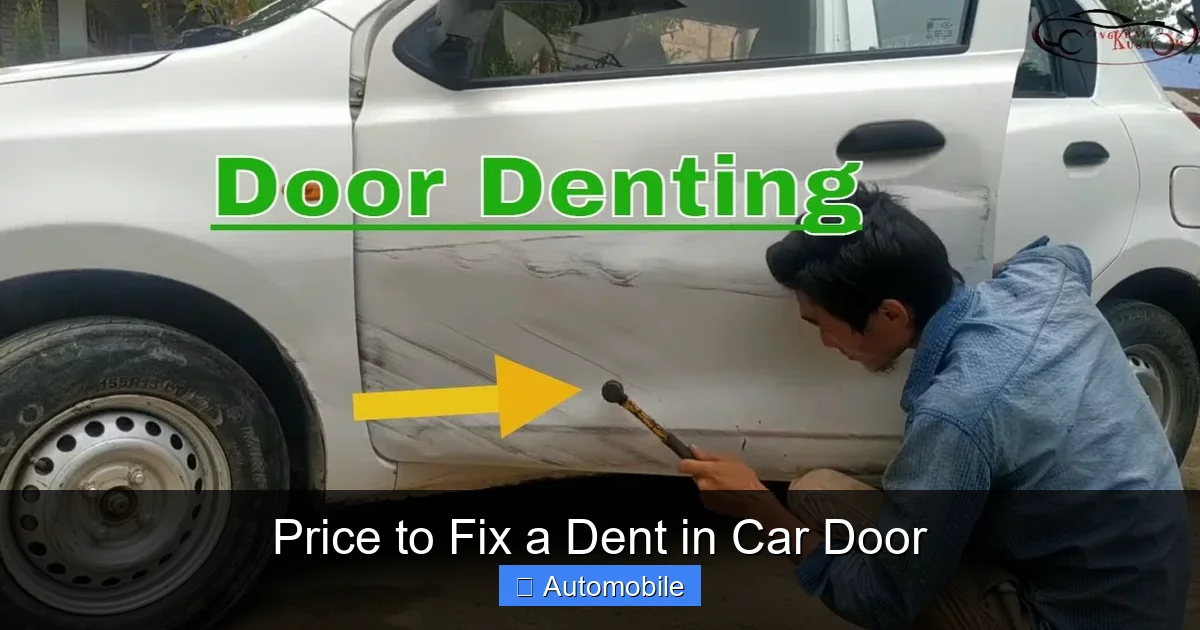
Visual guide about Price to Fix a Dent in Car Door
Image source: i.ytimg.com
Paintless Dent Repair (PDR): A Popular Choice
PDR is a highly specialized technique used for minor dents where the paint surface is still intact. Technicians use special tools to carefully massage the metal back into its original shape from behind the panel. It’s an art form that requires immense skill.
- Pros:
- Significantly cheaper than traditional methods.
- Faster repair time (often within hours).
- Maintains original factory paint finish, preserving vehicle value.
- Environmentally friendly (no paints or fillers).
- Cons:
- Only suitable for dents without paint damage.
- Limited effectiveness on very sharp, deep creases or dents on body lines.
- Typical Cost: The price to fix a dent in a car door using PDR can range from $75 to $250 for small, simple dings. Larger or more complex PDR jobs, perhaps involving multiple dents or harder-to-reach areas, might cost anywhere from $200 to $400+. It’s often the most affordable way to fix a dent.
Traditional Dent Repair: For More Severe Damage
When the dent is too large, too deep, has sharp creases, or involves paint damage, traditional bodywork is usually necessary. This method is more involved and takes longer. It typically includes:
- Sanding: The damaged area is sanded down to bare metal.
- Filling: Body filler is applied to bring the surface back to its original contour.
- Sanding and Priming: The filler is sanded smooth, and primer is applied.
- Painting: Multiple layers of paint are applied, often blending into surrounding panels to ensure a seamless color match.
- Clear Coat and Buffing: A clear coat is applied, followed by buffing and polishing for a factory-like finish.
- Pros:
- Can fix virtually any dent, regardless of size or paint damage.
- Restores the car’s appearance thoroughly.
- Cons:
- More expensive and time-consuming.
- The repaired area will have new paint, potentially affecting the car’s originality.
- Color matching can sometimes be an issue, though modern shops are very good at it.
- Typical Cost: The price to fix a dent in a car door with traditional repair can range from $300 to $1,000+. The cost can quickly escalate depending on the extent of damage, the need for blending paint into adjacent panels, and the type of vehicle. For very large or complex dents requiring significant bodywork, the cost could easily exceed $1,500.
DIY Dent Repair Kits: For the Brave and Cautious
For very minor, shallow dents without paint damage, some car owners consider DIY dent repair kits. These usually involve suction cups, glue-pulling tabs, or levers designed to pull the dent out. While tempting due to their low cost, they come with significant risks.
- Pros:
- Very low upfront cost (kits range from $20-$100).
- Convenient, can be done at home.
- Cons:
- Requires skill and patience; easy to make the dent worse (e.g., stretching the metal, damaging paint).
- Results are often not as good as professional repair.
- Not suitable for complex, sharp, or large dents.
- Typical Cost: The kits themselves are inexpensive. However, if you fail and need professional correction, the overall price to fix a dent in your car door could end up being higher than if you’d gone to a professional in the first place.
Full Door Panel Replacement: When All Else Fails
In extreme cases, such as very severe collisions or widespread damage to the car door, repairing the existing door may be more expensive or impossible than simply replacing the entire door panel. This is the most drastic and costly option.
- Pros:
- Ensures a completely new, undamaged panel.
- Best option for severely damaged doors beyond repair.
- Cons:
- Most expensive option by far.
- Requires significant labor for removal, installation, painting, and reassembly of internal components.
- Typical Cost: Replacing a car door panel can cost anywhere from $800 to $2,500+, depending on the car’s make and model, the cost of the new door, and labor for painting and installation. This is generally not considered when thinking about the typical price to fix a dent in a car door, but it’s an important option for severe damage.
DIY vs. Professional Dent Repair: What’s Best for You?
Deciding whether to tackle a dent yourself or seek professional help is a crucial step in managing the overall price to fix a dent in your car door. It depends largely on your comfort level, the dent’s severity, and your desire for a flawless finish.
When to Consider DIY
DIY methods are generally only suitable for the smallest, shallowest dents that have no paint damage. Think a minor ding from a pebble or a very slight door-to-door tap. If you have some patience, a steady hand, and are willing to accept less-than-perfect results, a cheap suction cup or glue-puller might be worth a try. Always research thoroughly and watch several tutorial videos before attempting. Remember, if you mess it up, a professional might charge more to fix your attempt than they would have for the original dent.
Why Professional Repair is Often Best
For most dents, especially those affecting paint, body lines, or larger areas, professional repair is almost always the superior choice. Here’s why:
- Expertise: Trained technicians have the tools, knowledge, and experience to assess the damage accurately and apply the correct repair method. They can often achieve results that are virtually undetectable.
- Specialized Tools: Body shops invest in high-quality PDR tools, paint matching systems, and other equipment that aren’t available to the average consumer.
- Quality Guarantee: Reputable shops often provide warranties on their work, giving you peace of mind.
- Preserves Value: A professional repair ensures the dent is fixed correctly, preserving your car’s aesthetic appeal and resale value. A poorly repaired DIY dent can actually diminish value.
While the initial price to fix a dent in your car door professionally might seem higher than a DIY kit, the quality of the repair and the avoidance of potential mistakes often make it the more cost-effective choice in the long run.
Getting a Fair Price: Quotes, Inspections, and Insurance
Once you decide on professional repair, the next step is finding a reputable shop and getting a fair price. Don’t rush this part. A little research can save you a lot of money and headaches.
Get Multiple Detailed Quotes
This is perhaps the most important tip. Don’t settle for the first quote you receive. Visit at least three different reputable auto body shops or PDR specialists. Ask for a detailed, written quote that outlines:
- The specific repair method proposed (PDR, traditional, etc.).
- A breakdown of labor costs and estimated hours.
- Parts costs (if any are needed).
- Paint costs (if applicable), including blending.
- Any additional charges (e.g., for removing door panels, detailing).
- An estimated completion time.
Compare these quotes carefully. A significantly lower quote might indicate a shop cutting corners, while an unusually high one could mean they’re overcharging. Ask questions if anything is unclear. This comparison will help you gauge the typical price to fix a dent in your car door in your area.
Check Shop Reputation and Reviews
Beyond the price, the quality of the work is paramount. Look for shops with excellent online reviews (Google, Yelp, etc.). Ask friends or family for recommendations. A highly-rated shop might charge a little more, but the peace of mind and quality of work are usually worth it. Look for certifications, like I-CAR training, which indicate a shop is committed to industry standards.
Ask About Warranties
A good body shop will stand behind its work. Inquire about their warranty policies on repairs, particularly for paintwork. A lifetime warranty on paint fade or peeling is a good sign of confidence in their craftsmanship.
Consider Your Insurance Deductible
If the dent resulted from a collision, you might be tempted to file an insurance claim. However, first, consider your deductible. If the estimated price to fix a a dent in your car door is, for example, $400, and your deductible is $500, it makes more sense to pay out-of-pocket. Filing a claim for a minor repair that falls below your deductible (or barely above it) often isn’t worth it, as it could potentially lead to higher premiums in the future. Always get quotes first, then compare them to your deductible.
Negotiate (Respectfully)
While not always possible, there might be a little wiggle room in the price, especially if you have multiple quotes. You could politely ask if they can match a competitor’s price or offer a small discount. However, avoid aggressive negotiation; good relationships with service providers are valuable.
Conclusion
A dent in your car door can be frustrating, but knowing the typical price to fix a dent in your car door and understanding your options can make the repair process much smoother. From small, affordable PDR jobs to more complex traditional bodywork, the cost spectrum is broad. Factors like the dent’s size, depth, location, and the presence of paint damage all play a crucial role in the final bill.
While DIY kits offer a tempting low-cost solution, professional repair by skilled technicians often provides the best, most lasting results, preserving your car’s appearance and value. Always take the time to gather multiple quotes, research shop reputations, and carefully weigh your options against your insurance deductible. By doing so, you can ensure your car door is restored to its former glory efficiently and at a fair price. Don’t let a dent diminish your car’s appeal – armed with this knowledge, you can confidently tackle the repair and get back to enjoying a pristine ride.
🎥 Related Video: Car dent fix trick 😨
📺 Sofia elizalde
shorts For any Credit or video removal requests, please email sofiabusinessenquiry@gmail.com and I’II get back to you within 12 …
Frequently Asked Questions
How long does it typically take to fix a car door dent?
The repair time varies significantly by method. Paintless Dent Repair (PDR) can often be completed in a few hours to a full day. Traditional bodywork involving sanding, filling, and repainting may take several days, depending on the dent’s complexity and the shop’s schedule.
Is it worth fixing a small dent on an older car?
For an older car, whether it’s worth fixing a small dent depends on its overall condition and your personal preference. If the car is otherwise in good shape and you plan to keep it, even a small dent repair can improve its appearance and prevent rust. For cars nearing the end of their life, it might not be a priority.
Will a dent repair show up on a car’s history report?
Minor dent repairs, especially those done out-of-pocket without an insurance claim, typically do not show up on a car’s history report. However, if an insurance claim is filed for a more significant repair, it will likely be documented in the vehicle’s history, such as a CarFax report.
Can a dent in an aluminum car door be repaired?
Yes, dents in aluminum car doors can be repaired, but it often requires specialized tools and techniques compared to steel. Aluminum is stiffer and can be more challenging to work with, which might slightly increase the price to fix a dent in an aluminum car door.
What happens if a dent is left unrepaired?
If a dent is left unrepaired, especially if the paint is chipped or cracked, it can lead to rust formation over time. Rust can spread, causing more extensive and costly damage to the door panel and potentially compromising the car’s structural integrity. Even if no rust occurs, the dent will diminish the car’s aesthetic appeal and resale value.
Why do repair costs vary so much between different shops for the same dent?
Repair costs vary due to differences in labor rates (which depend on location and shop overhead), the specific methods and materials used, technician skill levels, and the shop’s profit margins. Some shops might quote PDR while others insist on traditional repair for the same dent, leading to significant price discrepancies. Always get multiple quotes to compare.