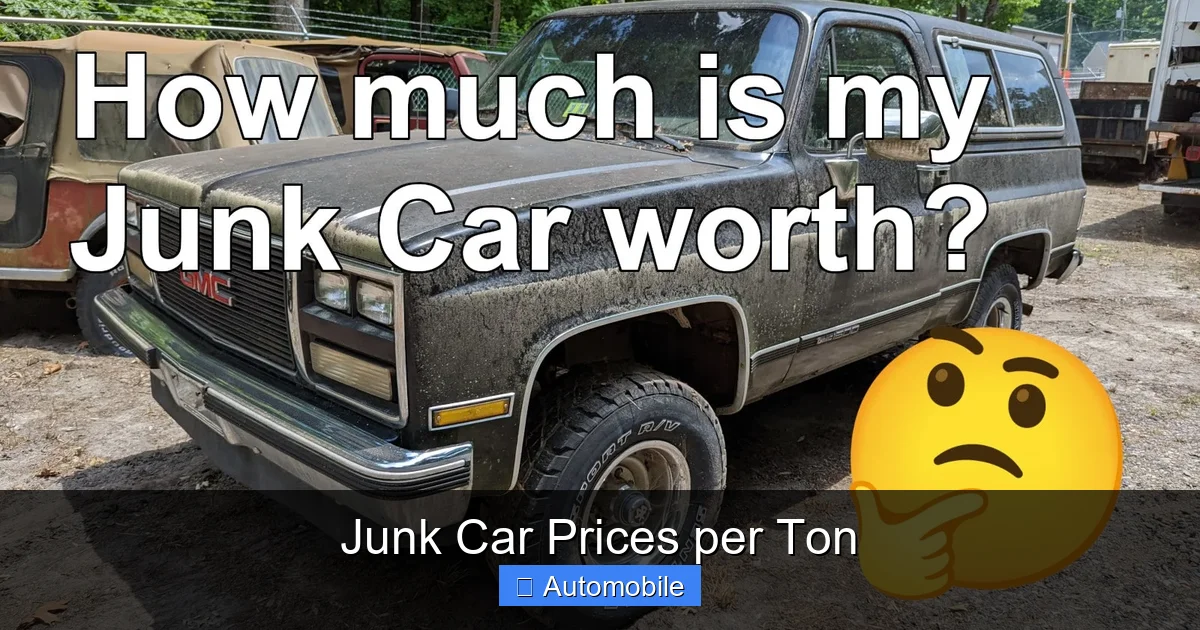
Understanding junk car prices per ton can significantly boost your payout when selling an old vehicle. These prices are primarily influenced by the fluctuating global scrap metal market, your car’s weight, its overall condition, and even your geographic location. By knowing these factors, you can make informed decisions and ensure you get the best possible value for your end-of-life vehicle.
Hey there! Got an old car sitting in your driveway, taking up space, and slowly turning into a giant metal ornament? You know the one – it hasn’t run in ages, the rust is winning, and every time you look at it, you wonder if it’s worth anything more than an eyesore. Well, you’re not alone! Many people eventually face the dilemma of what to do with a car that’s reached the end of its useful life.
Selling your junk car for scrap is a popular and often profitable solution. But how exactly does it work, especially when you hear terms like “junk car prices per ton”? It’s not as simple as a flat rate. The value of your old clunker is a dynamic figure, heavily influenced by a blend of global economics, local demand, and even the car’s specific characteristics. Understanding these factors can make a big difference in the payout you receive. So, let’s dive deep into the world of junk car prices per ton and uncover how to get the most for your old ride.
Key Takeaways
- Market Volatility is Key: Junk car prices per ton are directly tied to the global scrap metal market, which constantly fluctuates based on supply, demand, and economic factors.
- Weight Matters Most: The heavier your vehicle, the more scrap metal it contains, directly impacting its per-ton value, assuming other factors are equal.
- Condition Influences Value: A car with an intact catalytic converter or other reusable parts can fetch a higher price than one completely stripped down, even if sold per ton.
- Location Plays a Role: Proximity to scrapyards, demand for scrap metal in your region, and towing costs can all affect the final offer for your junk car.
- Get Multiple Quotes: Always contact several scrap yards or junkyards to compare offers, as prices can vary significantly between buyers.
- Prepare Your Vehicle: Draining fluids, removing personal items, and having proper documentation ready can streamline the process and potentially increase your payout.
Quick Answers to Common Questions
What is the main factor determining junk car prices per ton?
The main factor is the current global market price for scrap metal, especially steel and aluminum, which fluctuates daily based on supply and demand.
Does my car’s make and model affect its per-ton price?
While the make and model don’t directly change the per-ton price of steel, they can influence the overall value due to differences in total vehicle weight and the presence of more valuable components like certain types of catalytic converters.
Should I remove parts from my junk car before selling it for scrap?
Generally, it’s best to leave major components like the engine and catalytic converter unless you have specific knowledge and tools. Removing valuable parts can reduce the overall “per ton” offer for the remaining shell, and certain items like fluids should always be handled by professionals.
Do I need a title to sell my junk car for scrap?
In most places, yes, you will need a clear title (proof of ownership) to legally sell your junk car, even for scrap. Always check your local Department of Motor Vehicles (DMV) requirements.
How is the weight of my car determined for a per-ton price?
Scrapyards use certified scales to accurately weigh your vehicle. They typically weigh the car upon arrival and deduct the weight of the tow truck to get the net weight of your vehicle.
📑 Table of Contents
Understanding How Junk Car Prices Per Ton Are Determined
When you sell a junk car, especially one that’s beyond repair, its primary value often lies in its weight as scrap metal. This is where the “per ton” part comes in. Scrap yards and recyclers will weigh your vehicle and offer you a price based on the current market value for various metals. But it’s not just about the scales; several factors intertwine to set those junk car prices per ton.
The Global Scrap Metal Market
This is perhaps the biggest driver of junk car prices per ton. The price of steel, aluminum, and other metals isn’t static. It’s a global commodity, like oil or gold, and its value fluctuates daily based on international supply and demand, economic health, industrial production, and even geopolitical events. When demand for new steel is high (think construction booms or increased car manufacturing), scrap metal prices generally rise. Conversely, a slowdown in these industries can cause prices to drop. Your local scrapyard isn’t just pulling numbers out of thin air; they’re reacting to these larger market forces.
Vehicle Weight and Material Composition
It sounds obvious, but the heavier your car, the more scrap metal it contains, which directly impacts its per-ton value. A large SUV or a truck will generally command a higher scrap price than a compact sedan. Beyond just weight, the type of metals matters. Most cars are predominantly steel, but they also contain aluminum (engine blocks, wheels), copper (wiring), and other minor metals. The proportion of these different metals, especially the more valuable ones like copper, can subtly influence the overall junk car prices per ton.
Car’s Overall Condition (Beyond Just Scrap)
While we’re talking about “per ton,” it’s important to remember that not every part of your junk car is just scrap. A vehicle might be “junk” because it doesn’t run, but it could still have valuable components. Things like an intact catalytic converter (which contains precious metals), relatively new tires, a functioning engine, or even undamaged body panels can increase the overall value beyond just the metal weight. Scrapyards often dismantle vehicles, selling these usable parts for a profit before crushing the rest. So, a “total loss” car with some good parts will fetch a better price than one that’s been completely stripped.
Geographic Location
Where you live also plays a significant role in junk car prices per ton. Prices can vary from city to city, state to state. This is due to several reasons: proximity to major steel mills or recycling facilities (which reduces transportation costs for the buyer), local competition among scrapyards, and regional demand for scrap metal. If you’re in an area with many scrapyards vying for business, you might see slightly higher offers. Conversely, if you’re in a rural area far from any major recycling centers, towing costs might eat into your potential earnings.
The Volatile Nature of Scrap Metal Markets
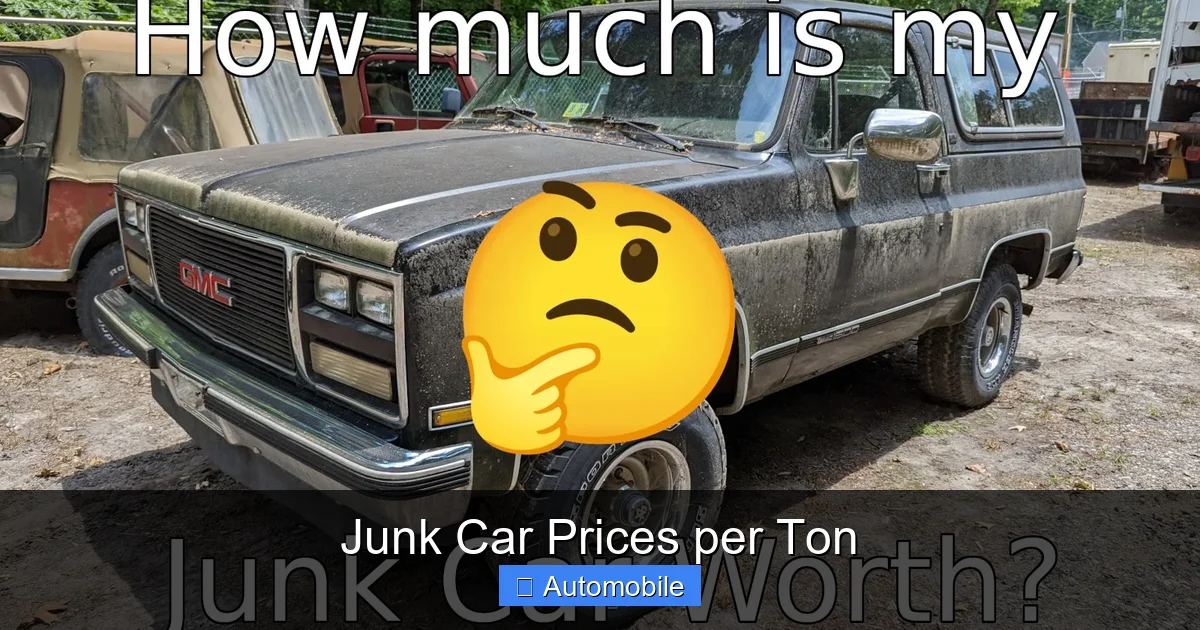
Understanding the global scrap metal market is crucial because it’s the primary engine driving junk car prices per ton. These prices are not static; they move up and down, sometimes quite dramatically, reflecting a complex interplay of economic forces.
Visual guide about Junk Car Prices per Ton
Image source: rvajunk.com
Factors Influencing Metal Prices
- Global Economic Health: When the global economy is booming, industries like construction, automotive, and manufacturing are active, leading to higher demand for raw materials, including steel and aluminum made from recycled scrap. A recession, on the other hand, dampens demand and pushes prices down.
- Supply and Demand: Simple economics dictate that if there’s an abundance of scrap metal on the market but low demand, prices will fall. Conversely, if supply is tight and demand is high, prices will rise.
- Energy Costs: Processing scrap metal, even though it’s more energy-efficient than producing virgin metal, still requires energy. High energy costs can sometimes be passed on, impacting the prices scrapyards are willing to pay.
- International Trade Policies: Tariffs, quotas, or trade disputes between countries can affect the flow of scrap metal across borders, influencing global and local prices. For example, if a major importing country reduces its intake of scrap, it can lead to an oversupply in exporting countries, driving down prices.
- Technological Advancements: New recycling technologies can sometimes make it more efficient to recover metals, potentially influencing supply and processing costs.
Tracking Market Trends
While you don’t need to become a commodity trader, a quick search for “current scrap metal prices” or “steel futures” can give you a general idea of the market direction. Some industry websites publish daily or weekly updates on scrap metal prices. Knowing if prices are on an upward or downward trend can help you decide if it’s a good time to sell or if waiting a few weeks might yield a better return on your junk car prices per ton.
Impact on Your Car’s Value
Think of it this way: if steel prices jump 10% in a month, the value of your car’s weight in steel will also increase. This direct correlation means that timing can be everything. While you can’t always control when your car becomes “junk,” being aware of these trends can help you make an informed decision and maximize the junk car prices per ton you receive.
Beyond the Ton: Other Value Drivers for Your Junk Car
While the “per ton” aspect is crucial, your junk car isn’t just a lump of generic metal. It’s a collection of components, some of which hold significant value independently. Understanding these can help you better negotiate or even consider removing certain parts yourself.
Catalytic Converter Value
This is often the most valuable single component in a junk car. Catalytic converters contain precious metals like platinum, palladium, and rhodium, which are extremely valuable. The type of car (make, model, year) and the size of the converter dictate its value. Some converters can be worth hundreds of dollars on their own. Scrapyards factor this into their offer, and if your converter is missing, it will significantly reduce the junk car prices per ton you receive.
Usable Parts and Components
Even if your car doesn’t run, many of its parts might still be perfectly fine and reusable. Think about:
- Engine and Transmission: If these are in working condition (or easily repairable), they can be highly sought after by mechanics or hobbyists.
- Body Panels: Undamaged doors, fenders, hoods, or trunks can be sold to repair shops or individuals looking to fix their own cars.
- Tires and Wheels: If they have decent tread and aren’t damaged, they have resale value.
- Alternator, Starter, A/C Compressor: These are common parts that often fail and are frequently replaced.
- Interior Components: Seats, dashboards, radios, and even working power window motors can be valuable.
Scrapyards often make money by pulling and reselling these parts before the car is crushed. Their offer for your junk car prices per ton includes an assessment of these potential resale values. If you’re handy, you might consider removing and selling some of these parts yourself before selling the rest as scrap, but be aware that a partially stripped car might receive a lower “per ton” price for the remaining shell.
Fluids, Tires, and Hazardous Materials
While these don’t add to the car’s monetary value, they are important for environmental reasons. Scrap yards are responsible for properly draining all fluids (oil, coolant, brake fluid, gasoline) and removing hazardous materials (like batteries and mercury switches) before crushing. This process costs them time and money. While you shouldn’t drain fluids yourself (it can be messy and harmful to the environment if not done correctly), be aware that the presence of tires, a full gas tank, or excessive fluids might be factored into the scrap yard’s offer, potentially slightly lowering the junk car prices per ton they are willing to pay.
Maximizing Your Payout: Smart Strategies for Selling
You want the best possible junk car prices per ton for your old vehicle, right? Here are some practical tips to help you get there.
Get Multiple Quotes
This is perhaps the most important tip. Don’t just call the first scrapyard you find. Contact at least three to five different buyers – local scrapyards, junkyards, and even specialized “junk car buyers.” Prices can vary significantly based on their current inventory needs, their assessment of your car’s usable parts, and their overheads. Some might offer a flat rate, others a per-ton price. Make sure you understand how each quote is calculated.
Be Honest About Your Car’s Condition
When you call for a quote, be as accurate as possible. Disclose whether the car runs, if it’s missing major components (like the engine or catalytic converter), or if it has any significant damage. Misrepresenting your car’s condition can lead to a lower offer upon inspection or even refusal to pick it up, wasting your time. Transparency ensures you get an accurate initial quote for your junk car prices per ton.
Prepare Your Vehicle (Safely)
- Remove Personal Belongings: Double-check the glove compartment, trunk, under the seats, and any storage bins. You’d be surprised what people leave behind!
- Gather Paperwork: Have your vehicle title (or proof of ownership) and a valid ID ready. This is non-negotiable for a legal sale.
- Consider Removing License Plates: In most areas, you’ll need to remove your license plates before the car is towed and return them to your local DMV. Check your local regulations.
- Leave Fluids and Tires: Unless you are an expert, it’s generally best to leave the draining of fluids and tire removal to the professionals at the scrap yard. They have the equipment and environmental protocols to do it safely.
Choose the Right Buyer
Not all buyers are created equal. Some focus purely on scrap metal by the ton, others specialize in salvaging parts, and some are general junk car removal services. Depending on your car’s specific condition (e.g., if it has a valuable catalytic converter or good used parts), one type of buyer might offer better junk car prices per ton than another. Read reviews, ask about their process, and ensure they provide proper documentation for the sale.
The Selling Process: From Quote to Cash
Selling your junk car might seem daunting, but it’s usually a straightforward process. Here’s a typical rundown of how it works once you’ve decided to get rid of your old vehicle and want to know about junk car prices per ton.
Initial Contact and Information Gathering
Your journey begins by contacting potential buyers. This can be done online, over the phone, or by visiting a local scrapyard. Be prepared to provide detailed information about your car:
- Make, Model, Year: This helps them identify common parts and metal composition.
- Overall Condition: Does it run? Is it drivable? What’s damaged? Is the catalytic converter present?
- Location: For towing purposes.
- Title Status: Do you have a clear title?
Based on this information and the current scrap metal market rates, they will give you an initial quote for your junk car prices per ton (or a flat rate). Remember to get several quotes!
Vehicle Inspection and Final Offer
Once you accept an initial quote, the buyer will typically schedule a pickup. At this point, they’ll perform a quick visual inspection of your vehicle. This is to verify the information you provided and ensure no major discrepancies exist. If everything matches, they will confirm the final offer. It’s rare for the price to change dramatically if you were honest upfront, but be prepared for minor adjustments based on their on-site assessment of the vehicle’s actual weight or condition.
Towing and Payment
Most reputable junk car buyers offer free towing. This is a crucial service, especially for non-running vehicles. Once the car is loaded onto their tow truck, you’ll finalize the paperwork. This usually involves signing over the vehicle title and receiving payment. Payment is commonly made in cash or by check on the spot. Always ensure you get a receipt or bill of sale, and remember to remove your license plates and notify your DMV of the sale.
And just like that, your old rust bucket is gone, and you have some cash in your pocket. The process is designed to be as hassle-free as possible, ensuring that even getting rid of a junk car can be a relatively smooth experience, especially when you understand the ins and outs of junk car prices per ton.
Conclusion
Selling your junk car for scrap is a smart way to clear space, earn some cash, and contribute to environmental recycling efforts. While the concept of “junk car prices per ton” might seem straightforward, it’s truly a complex equation influenced by global metal markets, your car’s specific characteristics, and even your geographic location.
By understanding these key factors – from the volatile nature of steel and aluminum prices to the hidden value of components like catalytic converters – you empower yourself to make informed decisions. Remember to always get multiple quotes, be honest about your car’s condition, and have your paperwork in order. With a little preparation and knowledge, you can ensure that your old vehicle provides its final, valuable service, earning you the best possible price for its weight in metal. So, go ahead, turn that eyesore into extra cash!
🎥 Related Video: Scrap Car Baler ##❗️❗️
📺 ToolBox Talk 20
Scrap Recycling Manufacturing Hydraulic Press Machine Scrap Car Baler Scrap Car Recycling Machine In Action First Time …
Frequently Asked Questions
How often do junk car prices per ton change?
Junk car prices per ton can change daily or weekly, reflecting the constant fluctuations in the global scrap metal market. It’s a good idea to get a quote close to when you plan to sell.
Will my car’s rust level affect the junk car prices per ton?
While minor rust doesn’t significantly impact the scrap metal value, extensive rust that reduces the structural integrity or weight of the vehicle could slightly affect the perceived value, though usually not dramatically for scrap.
Is it better to sell a running junk car or a non-running one?
A running junk car might fetch a slightly higher price than a non-running one because it indicates the engine and transmission might still be usable parts. However, the difference for a “junk” car is often not huge.
Do scrapyards pick up cars for free?
Most reputable junk car buyers and scrapyards offer free towing services as part of their deal. Always confirm this when getting a quote to avoid unexpected costs.
What paperwork do I need to sell my junk car?
You will primarily need the vehicle’s title (proof of ownership) and a valid photo ID. Some states may have additional requirements, so it’s wise to check with your local DMV.
What happens to my car after it’s sold for scrap?
After being sold, your car is processed at the scrapyard. Usable parts like tires, engines, or catalytic converters are removed, fluids are drained, and the remaining metal shell is crushed, shredded, and then sent to steel mills or smelters for recycling.