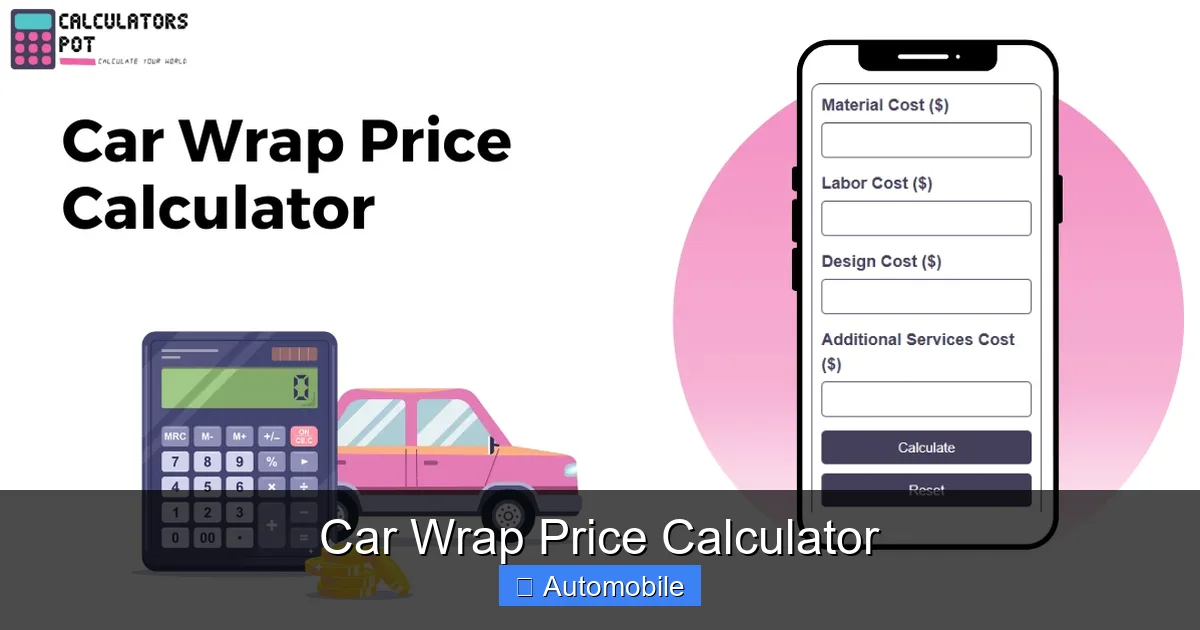
Embarking on a car wrap project can be exciting, but understanding the cost is crucial. A car wrap price calculator serves as an invaluable preliminary tool, helping you estimate potential expenses based on factors like vehicle size, wrap type, material, and design complexity. While not a final quote, it empowers you to budget effectively and make informed decisions, ensuring you achieve your desired aesthetic without financial surprises. This guide will help you master the use of a car wrap price calculator and navigate the world of automotive customization.
Ever dreamed of giving your car a stunning, fresh look without the permanence and expense of a new paint job? Car wrapping has exploded in popularity, offering a versatile, reversible, and protective way to transform your vehicle’s appearance. Whether you’re looking to change the color, add a custom design, or protect your original paint, a car wrap can be an incredible solution.
But then comes the big question: “How much does a car wrap cost?” This is where the excitement can sometimes turn into a bit of a head-scratcher. With so many variables – from vehicle size to material type and design intricacy – figuring out an initial budget can feel like trying to solve a puzzle. Thankfully, there’s a fantastic tool designed to help you get a clear picture right from the start: the car wrap price calculator.
In this comprehensive guide, we’re going to dive deep into everything you need to know about using a car wrap price calculator. We’ll explore what it is, why it’s so useful, the key factors that influence wrap costs, and how to use these calculators effectively to plan your dream car transformation. Get ready to unwrap the mystery of car wrap pricing!
Key Takeaways
- Understanding the Basics: A car wrap price calculator helps you estimate the cost of wrapping your vehicle by considering various key factors before you get a professional quote.
- Key Cost Factors: Vehicle size, type of wrap (full/partial), material quality, design complexity, and installer expertise are the primary elements that influence the final price.
- Estimator vs. Quote: Online car wrap price calculators provide a valuable starting estimate, but a precise quote always requires a physical inspection by a professional installer.
- Budgeting and Planning: Using a car wrap price calculator empowers you to set a realistic budget, compare options, and understand the cost implications of different design choices.
- Material Matters: The choice of vinyl – from standard gloss to exotic chrome or textured finishes – significantly impacts the cost, often being a major differentiator in calculator outputs.
- Professional Installation is Key: While the calculator provides material and labor estimates, the installer’s reputation, experience, and location can influence the final price and the quality of the wrap.
- Long-Term Value: Consider the benefits beyond aesthetics, such as paint protection and potential resale value, when evaluating the overall investment indicated by a car wrap price calculator.
Quick Answers to Common Questions
What is the main purpose of a car wrap price calculator?
The main purpose of a car wrap price calculator is to provide an estimated cost for wrapping a vehicle, helping individuals budget and understand the factors influencing the price before seeking a professional quote.
What are the biggest factors affecting car wrap cost?
The biggest factors affecting car wrap cost are the size of the vehicle, the type of wrap (full, partial), the quality and type of vinyl material, and the complexity of the design.
Can a car wrap price calculator give me an exact final price?
No, a car wrap price calculator provides an estimate or a price range. An exact final price requires a physical inspection of your vehicle by a professional installer who can assess its condition and discuss specific details.
Are all vinyl materials priced the same?
Absolutely not. Vinyl materials vary widely in price. Standard gloss or matte films are generally more affordable, while specialty films like chrome, color-shifting, or textured vinyl are significantly more expensive due to their unique properties and manufacturing processes.
Why is professional installation recommended over DIY, even if it costs more?
Professional installation is recommended because it ensures a high-quality, durable, and aesthetically pleasing finish. Experienced installers have the proper tools, environment, and expertise to apply vinyl flawlessly, preventing issues like bubbles, peeling, or misalignment that often occur with DIY attempts and can lead to costly re-dos.
📑 Table of Contents
- What is a Car Wrap Price Calculator and Why Do You Need One?
- Key Factors Influencing Car Wrap Costs (and Your Calculator Inputs)
- How to Use a Car Wrap Price Calculator Effectively
- Beyond the Calculator: Getting Accurate Quotes and Avoiding Pitfalls
- The ROI of Car Wrapping: Is It Worth the Investment?
- Conclusion: Empowering Your Car Wrap Journey
What is a Car Wrap Price Calculator and Why Do You Need One?
At its core, a car wrap price calculator is an online tool that helps you estimate the potential cost of wrapping your vehicle. Think of it as your preliminary budgeting assistant. Instead of calling multiple shops just to get a ballpark figure, you can input a few key details about your car and your desired wrap, and the calculator provides an estimated price range.
The Power of Early Estimation
Why is such a tool so important? Because car wrapping isn’t a one-size-fits-all service. Prices can vary significantly, often ranging from a few hundred dollars for a partial wrap to several thousand for a full, custom job with premium materials. A good car wrap price calculator helps you:
- Set a Realistic Budget: Before you get too far into design ideas, it helps you understand what’s financially feasible.
- Compare Options: You can play with different scenarios – what if I choose a matte finish instead of chrome? How much more would a full wrap be versus a partial?
- Understand Cost Drivers: It educates you on which factors have the biggest impact on price, empowering you to make informed decisions.
- Prepare for Professional Quotes: With an estimate in hand, you’ll be better prepared to discuss your project with professional installers and understand their quotes.
Using a car wrap price calculator demystifies the initial cost barrier, making the whole process less intimidating and much more manageable.
Key Factors Influencing Car Wrap Costs (and Your Calculator Inputs)
When you use a car wrap price calculator, you’ll notice it asks for several pieces of information. Each of these inputs directly correlates to a significant cost factor. Understanding these elements is key to getting an accurate estimate.
Visual guide about Car Wrap Price Calculator
Image source: vehiclewrappricingcalculator.com
Vehicle Size and Type
This is often the first and most obvious factor. A larger vehicle requires more material and more labor time. A small coupe will naturally cost less to wrap than a large SUV, truck, or a commercial van. Exotic cars or vehicles with complex body lines (like many sports cars) might also incur higher labor costs due due to increased difficulty and precision required. Most car wrap price calculators will ask for your vehicle’s make, model, and year to accurately gauge its size and complexity.
Type of Wrap: Full, Partial, or Accents
Are you looking to change the entire color of your car, or just add some flair? Your choice here dramatically impacts the cost:
- Full Wrap: This covers almost every painted surface of your vehicle, providing a complete color or design change. It requires the most material and labor, hence it’s the most expensive option.
- Partial Wrap: This covers only specific sections, like the hood, roof, fenders, or doors. It’s a great way to add custom elements or branding without the full cost.
- Accents/Details: This includes smaller elements like mirror caps, spoilers, interior trim, racing stripes, or chrome deletes. These are the most affordable options.
A car wrap price calculator will typically have options for these different coverage levels.
Material Quality and Type
The type of vinyl film you choose is a huge cost driver. Not all vinyl is created equal! Here are some common types:
- Standard Vinyl (Gloss, Matte, Satin): These are the most common and cost-effective options, offering a wide range of colors and finishes.
- Textured Vinyl: Options like carbon fiber, brushed metal, or leather textures add a unique tactile and visual element, and typically come at a higher price.
- Specialty Films: Chrome, color-shifting (chameleon), or reflective films are premium materials. They are often more difficult to work with, require specialized installation techniques, and come with a significantly higher price tag.
- Paint Protection Film (PPF): While technically not a “wrap” in the traditional sense of color change, many calculators include options for clear PPF, which is designed solely for protection and can be quite expensive due to its advanced properties and thicker material.
Reputable brands like 3M, Avery Dennison, and KPMF produce high-quality, durable films. Choosing these trusted brands, while potentially costing more upfront, often saves money in the long run due to better longevity and easier removal.
Design Complexity
If you’re not just going for a solid color but want custom graphics, logos, or intricate patterns, the design complexity will increase the cost. This includes:
- Custom Printing: If your design needs to be printed onto the vinyl, there’s a cost associated with the printing process itself.
- Intricate Cuts and Details: Designs with many small pieces, tight curves, or specific alignments require more meticulous labor.
- Multi-Layered Designs: Applying multiple layers of vinyl for complex effects will also add to the overall price.
Some car wrap price calculators might have options for “standard color,” “custom printed design,” or “complex custom design” to reflect these differences.
Installer Experience and Location
The skill of the installer is paramount to a high-quality wrap. Experienced, certified installers who use proper techniques and take their time will generally charge more. Their labor rates reflect their expertise, specialized tools, and often, the quality of their facility. Location also plays a role; shops in major metropolitan areas with higher overheads tend to charge more than those in smaller towns. While a car wrap price calculator can’t always account for specific installer rates, it gives you a general understanding of labor costs.
Surface Preparation and Post-Installation Care
A good wrap starts with a perfectly clean and smooth surface. Any imperfections (dents, scratches, rust) will show through the wrap. If your car requires significant paint correction or bodywork before the wrap can be applied, these costs will be added. While not always directly included in a basic car wrap price calculator, it’s an important factor to consider. Similarly, proper post-installation care can extend the life of your wrap, though initial cleaning is usually part of the installation process.
How to Use a Car Wrap Price Calculator Effectively
Ready to get an estimate for your dream wrap? Here’s how to make the most out of a car wrap price calculator:
Gathering Your Vehicle Information
Start by providing accurate details about your car. This usually includes:
- Year, Make, Model: This helps the calculator determine the vehicle’s size and general shape.
- Vehicle Type: Sedan, SUV, Truck, Coupe, Van, etc.
- Current Condition: Some calculators might ask about your car’s current paint condition, as significant flaws can impact installation difficulty.
Understanding Material Options
Spend some time researching the different vinyl types and finishes available. Look at photos, watch videos, and consider requesting samples from wrap shops. When using the car wrap price calculator, select the material type that best matches your aesthetic and budget. Experiment with different options to see how they affect the estimated price.
- Tip: Gloss finishes are generally the most affordable, while chrome, textured, and color-shift films are at the higher end.
Considering Design Elements
If you’re going beyond a solid color, think about your design. Will it involve:
- Printed graphics?
- Multiple colors or layers of vinyl?
- Intricate logos or patterns?
The more complex your design, the higher the estimated cost will be. A good car wrap price calculator will allow you to specify design complexity or whether it’s a solid color versus a custom print.
Factoring in Professional Installation
While the calculator provides an estimate, remember that labor costs vary. The prices generated by a car wrap price calculator typically assume a professional installation. Always budget for this essential service, as a DIY wrap can lead to bubbling, peeling, and a generally poor finish, ultimately costing you more to fix.
Interpreting the Results
Most car wrap price calculators will give you a price range rather than an exact figure. This range accounts for variations in material cost, labor, and regional pricing. Use this range as your preliminary budget. If the estimate is higher than you expected, consider adjusting your choices – perhaps a partial wrap instead of a full one, or a standard finish instead of a specialty film.
Beyond the Calculator: Getting Accurate Quotes and Avoiding Pitfalls
While a car wrap price calculator is an excellent starting point, it’s important to understand its limitations. It provides an estimate, not a final quote.
Why Online Calculators Are a Starting Point
Online calculators use generalized data. They don’t know the exact condition of your vehicle’s paint, the specific hourly rate of your local installer, or the nuances of a particularly challenging body panel on your exact model. They are fantastic for rough budgeting but can’t replace human expertise.
The Importance of Physical Inspections
Once you have an estimate from a car wrap price calculator, the next crucial step is to visit a reputable local wrap installer for a physical inspection. During this visit, the installer will:
- Assess your vehicle’s current condition (dents, scratches, rust).
- Discuss your exact design and material preferences in detail.
- Provide an accurate, itemized quote based on their specific labor rates and material costs.
What to Ask Your Installer
When you meet with installers, don’t be afraid to ask questions:
- What specific brand of vinyl do you use? (e.g., 3M, Avery Dennison)
- What does your quote include (material, labor, warranty, taxes)?
- How long will the installation take?
- Do you offer any warranty on the wrap or the installation?
- Can I see examples of your previous work?
- What is your policy for touch-ups or repairs if needed?
Hidden Costs to Watch Out For
Some costs might not be immediately apparent when using a car wrap price calculator or getting an initial quote. Always clarify if these are included:
- Paint Correction: If your car’s paint needs significant work before the wrap.
- Emblem Removal/Reinstallation: Often, emblems are removed for a seamless wrap and then reinstalled.
- Disassembly/Reassembly: Complex vehicles might require minor disassembly of mirrors, door handles, or lights.
- Waste Material: While typically factored into the overall material cost, excessive waste from intricate designs can add up.
- Post-Wrap Cleaning/Maintenance Kits: Some installers offer these as an add-on.
Red Flags to Avoid
Be wary of unusually low prices compared to what your car wrap price calculator indicated and other quotes. This could signal:
- Poor quality, non-automotive grade vinyl.
- Inexperienced installers.
- Lack of proper insurance or warranty.
- Skipping crucial prep steps, leading to a shorter-lasting wrap.
Always prioritize quality and reputation over the absolute lowest price when it comes to car wrapping.
The ROI of Car Wrapping: Is It Worth the Investment?
Beyond the immediate aesthetic appeal, consider the long-term benefits when evaluating the investment indicated by a car wrap price calculator.
- Paint Protection: A quality vinyl wrap acts as a protective layer against stone chips, minor abrasions, UV damage, and environmental contaminants. This can preserve your original paint, which is beneficial for resale value.
- Reversible Customization: Unlike a paint job, a wrap is completely reversible. You can remove it years later to reveal the original paint in pristine condition, which can be a huge selling point.
- Cost-Effectiveness vs. Paint: A high-quality full car wrap can often be significantly cheaper than a professional, full repaint, especially for custom colors or finishes.
- Branding Opportunity: For businesses, a car wrap is a mobile billboard, offering incredible advertising value that far outweighs its initial cost.
By using a car wrap price calculator and carefully planning your project, you’re not just buying a new look; you’re investing in your vehicle’s protection, personalization, and potential resale value.
Conclusion: Empowering Your Car Wrap Journey
Transforming your vehicle with a car wrap is an exciting venture, offering endless possibilities for customization and protection. While the initial question of “how much will it cost?” can seem daunting, the existence of a reliable car wrap price calculator makes the journey much clearer and more manageable.
By diligently using a car wrap price calculator, understanding the factors that influence pricing, and engaging with reputable professional installers, you empower yourself to make informed decisions. You can confidently budget for your project, explore various options, and ultimately achieve the stunning, personalized look you envision for your vehicle, all without any unwelcome financial surprises. So go ahead, start calculating, and get ready to turn heads with your newly wrapped ride!
🎥 Related Video: How Much to Wrap a New 2025 Car: Cost, Tips, and More
📺 Lucca and Miguel – Tutorials
Up to 70 % off electronics on Amazon — updated daily ▸https://amzn.to/499SHzU ✈️ Traveling? Find the best deals on flights …
Frequently Asked Questions
How accurate is a car wrap price calculator?
A car wrap price calculator provides a good general estimate or a price range, typically accurate enough for preliminary budgeting. However, it cannot account for every unique detail like specific paint imperfections on your car or an installer’s exact labor rate, so the final quote from a professional might vary slightly.
Do I need to clean my car before taking it to the wrap installer?
Yes, while installers will perform their own thorough cleaning and surface preparation, it’s helpful and courteous to bring your car in a reasonably clean state. This allows them to focus on the intricate prep work necessary for optimal vinyl adhesion.
How long does a car wrap typically last?
A high-quality car wrap, properly installed and maintained, can typically last anywhere from 5 to 7 years. The lifespan depends on the quality of the vinyl, exposure to elements like sun and harsh weather, and how well you maintain it.
Will a car wrap damage my car’s original paint?
No, a properly installed and removed car wrap should not damage your car’s original factory paint, provided the paint was in good condition to begin with. In fact, it acts as a protective layer. Issues typically arise if the underlying paint was already damaged or repainted with a low-quality finish.
Can a car wrap be removed?
Yes, one of the major advantages of a car wrap is that it is completely reversible. It can be professionally removed without damaging the underlying factory paint, allowing you to return to your original color or apply a new wrap.
Is a car wrap a good investment for resale value?
A car wrap can potentially benefit resale value by protecting the original paint and keeping it in pristine condition, which is appealing to buyers. Additionally, a tasteful and well-maintained wrap can make your vehicle stand out, though highly customized or unusual wraps might appeal to a niche market.