Embarking on a Formula 4 racing journey involves understanding a multifaceted investment. The formula 4 car price is just the starting point, encompassing costs for the chassis, engine, and essential components. Beyond the initial purchase, prospective drivers must budget for substantial operational expenses like team fees, tires, fuel, entry fees, and extensive testing, making a full season a significant financial commitment often reaching hundreds of thousands of dollars. Success in this category requires not only driving talent but also a robust financial strategy, making understanding the total cost crucial for aspiring champions.
Hey there, aspiring racer or motorsport enthusiast! Have you ever dreamt of climbing the motorsport ladder, starting with the thrilling world of Formula 4? F4 is often the first major step for young drivers out of karting, a crucial proving ground where future champions hone their skills. It’s a fantastic series, known for its fierce competition, equalized machinery, and the sheer excitement of open-wheel racing.
But let’s be real for a moment. Dreams often come with a price tag, and motorsport is no exception. One of the most common questions, and perhaps the most intimidating, for anyone looking at this path is: “What is the formula 4 car price?” It’s a question that opens up a much larger discussion than just the cost of the car itself. Understanding the full financial picture is absolutely essential before you even think about putting on a helmet.
So, buckle up! In this comprehensive article, we’re going to dive deep into every aspect of the Formula 4 car price. We’ll explore the initial investment, uncover those hidden costs, look at the professional support you’ll need, and even peek into the used car market. Our goal is to give you a clear, no-nonsense breakdown of what it truly costs to compete in this exciting category of racing. Let’s peel back the layers and discover the real investment involved.
Key Takeaways
- Base Car Price Varies: A new Formula 4 car price typically ranges from €45,000 to €60,000 (approx. $50,000 – $70,000 USD), while used cars can be found for significantly less, starting around €25,000 – €40,000.
- Operational Costs are Substantial: The initial purchase is a fraction of the total investment. Ongoing expenses like tires (multiple sets per weekend), fuel, race entry fees, and spare parts add up quickly, often exceeding the car’s initial cost.
- Team Services are Essential: Most drivers compete with professional teams, incurring significant fees for mechanics, engineers, transport, logistics, and hospitality. These team costs are a major component of the overall budget.
- Driver Development is an Investment: Beyond the car, aspiring racers must budget for professional coaching, simulator training, physical conditioning, and media training, all crucial for improving performance and marketability.
- Used Market Offers Accessibility: Buying a used F4 car can significantly lower the entry barrier, but careful inspection for chassis mileage, engine hours, and crash history is vital to avoid unexpected refurbishment costs.
- Total Season Budget is High: A single season in a Formula 4 championship can cost anywhere from €150,000 to €400,000+ ($170,000 – $450,000+ USD), depending on the championship, team, and testing program.
- Sponsorship is Often Crucial: Due to the high costs, securing sponsorship and external funding is a common and often necessary strategy for drivers to compete and progress in Formula 4.
Quick Answers to Common Questions
How much is a new Formula 4 car?
A brand-new Formula 4 car typically costs between €45,000 and €60,000 (approximately $50,000 – $70,000 USD), including the chassis and engine.
What are the biggest recurring costs in F4 racing?
The biggest recurring costs are team fees (mechanics, engineers, transport), tires, fuel, race entry fees, and extensive testing sessions.
Can I buy a used F4 car to save money?
Yes, you can buy a used F4 car, which can significantly reduce the initial formula 4 car price, often starting from €25,000 – €40,000. However, always inspect its history and condition thoroughly.
Do I need a team to race in Formula 4?
Yes, professional team support is virtually mandatory for competing in Formula 4. Teams provide crucial technical expertise, logistics, and personnel required for safe and competitive racing.
What’s a typical F4 season budget?
A typical budget for a competitive single Formula 4 season can range from €150,000 to €400,000+ (approximately $170,000 – $450,000+ USD), depending on the championship, team, and testing involved.
📑 Table of Contents
- The Base Formula 4 Car Price – What You See on the Sticker
- Beyond the Sticker – Hidden Costs and Essential Add-ons
- The Team Factor – Professional Support and Services
- Driver Development and Training – Investing in Yourself
- The Used Market – A More Accessible Entry Point?
- Total Season Budget – Putting It All Together
- Conclusion: The True Cost of Chasing a Dream
The Base Formula 4 Car Price – What You See on the Sticker
Let’s start with the most straightforward part: the actual F4 car price. When we talk about the initial cost, we’re looking at the chassis, engine, and basic components that make up a ready-to-race machine. However, even this “simple” price isn’t entirely uniform.
New vs. Used Formula 4 Cars
Just like road cars, F4 cars can be bought new or used. A brand-new Formula 4 car price typically falls within the range of €45,000 to €60,000 (approximately $50,000 – $70,000 USD). This cost includes the complete rolling chassis, engine, gearbox, and all necessary components from the manufacturer. It’s pristine, has zero mileage, and comes with all the latest homologation updates.
On the other hand, the used market offers a more accessible entry point. A pre-owned F4 car can start from as low as €25,000 to €40,000 (approximately $28,000 – $45,000 USD), sometimes even less for older models or cars that need a bit of TLC. This is often the route many choose to take to keep the initial formula 4 car price down.
Different Manufacturers and Their Impact
Formula 4 championships around the world use cars from different manufacturers, though all adhere to strict FIA (Fédération Internationale de l’Automobile) safety and performance regulations. Common manufacturers include Tatuus (Italy), Mygale (France), Ligier (France), Dome (Japan), and more recently, new chassis from manufacturers like GB4 in the UK. While the core philosophy of F4 is to equalize performance, subtle differences in manufacturing processes, materials, and components can lead to slight variations in the initial formula 4 car price from one supplier to another.
The Engine Package
Another crucial component impacting the F4 car price is the engine. Formula 4 series are typically single-engine supplier championships, meaning all cars use the same specified engine. Common examples include the Abarth (Fiat) engine in Italian and ADAC F4, the Ford EcoBoost engine in British F4, or Renault engines in others. The engine package is often leased or purchased separately from the chassis, or it’s included in the overall team package. These engines are sealed and maintained by specific preparers to ensure parity and control costs. The cost of a new or freshly rebuilt engine can be a significant part of the overall Formula 4 car price, often in the range of €10,000 to €15,000 (approx. $11,000 – $17,000 USD) if purchased standalone, or factored into lease agreements.
Beyond the Sticker – Hidden Costs and Essential Add-ons
Alright, you’ve bought the car. Fantastic! But hold your horses, because the initial formula 4 car price is just the tip of the iceberg. Racing is an expensive sport, and there are many recurring and essential costs that need to be factored into your budget.

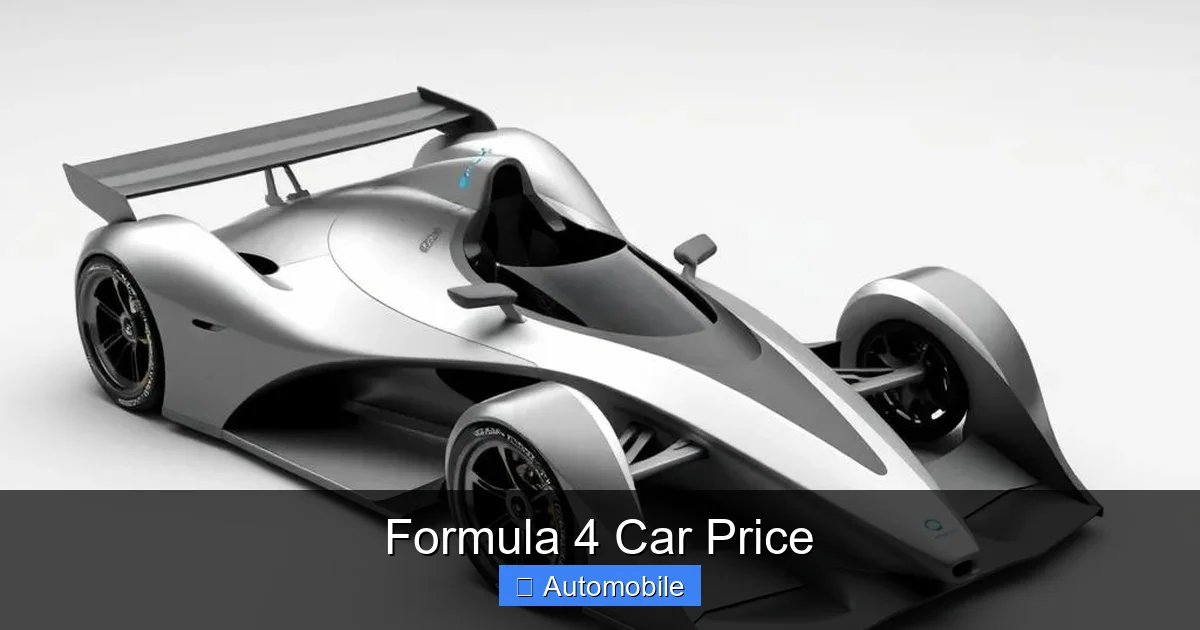
Visual guide about Formula 4 Car Price
Image source: images.mykhel.com
Race Entry and Season Fees
To compete in a championship, you’ll need to pay entry fees for each race weekend or a lump sum for the entire season. These fees cover track hire, safety personnel, race control, medical services, and often a portion of the prize money fund. Depending on the championship, these can range from €2,000 to €5,000+ (approx. $2,200 – $5,500+) per race weekend, or tens of thousands for a full season. For a 7-round championship, this alone can add up to €14,000 – €35,000+.
Tires, Tires, Tires!
This is where things get really expensive, really fast. Tires are consumables, and F4 cars chew through them. Teams often use multiple sets of tires per race weekend – one for practice, one for qualifying, and fresh sets for each race. A single set of F4 tires can cost around €1,000 to €1,500 (approx. $1,100 – $1,700). For a typical race weekend where a driver might use 3-4 sets for testing, practice, qualifying, and races, you’re looking at €3,000 – €6,000 just for rubber. Over a full 7-round season, tire costs alone can easily exceed €20,000 – €40,000+.
Fuel and Other Consumables
High-performance racing engines consume specialized fuel, which isn’t cheap. Factor in fuel for testing, practice, qualifying, and races, and this becomes another regular expense. Additionally, brake pads, fluids, and minor components are consumables that need constant replacement. These might seem small individually, but they add up over a season.
Safety Equipment
Your personal safety equipment is non-negotiable and represents a significant upfront cost. A high-quality FIA-approved helmet, HANS (Head and Neck Support) device, fire-retardant racing suit, gloves, and boots are mandatory. Expect to spend anywhere from €3,000 to €8,000+ (approx. $3,300 – $9,000+) on your personal gear, depending on brands and specifications.
Spares and Repairs
Racing is inherently risky, and accidents happen. Even minor scrapes can require new bodywork (front wing, rear wing, sidepods), suspension components, or other parts. Keeping a stock of essential spares on hand is vital for any team. The cost of a new front wing, for example, can be several thousand euros. While you hope not to use them often, budgeting for potential repairs and spare parts is crucial. A “crash budget” is a real thing in motorsport!
The Team Factor – Professional Support and Services
Unless you’re planning to run your F4 car out of your garage (which is highly impractical and likely disallowed), you’ll need a professional racing team. This is often the largest single expense category, dwarfing the initial formula 4 car price.
Team Entry and Support Fees
A professional team provides everything you need to go racing: mechanics, engineers, transport, logistical support, pit garage space, data analysis, and often hospitality. Team fees vary wildly depending on the championship, the team’s reputation, and the level of support offered (e.g., one-car entry vs. multi-car team with shared resources). For a full season in a reputable Formula 4 championship, expect team fees to range from €100,000 to €250,000+ (approx. $110,000 – $280,000+ USD). This typically covers:
- Mechanics and Engineers: Their salaries, travel, and accommodation.
- Logistics and Transport: Moving the car, spares, and equipment to each track.
- Garage Space and Equipment: The professional setup at the track.
- Data Analysis: Engineers who analyze telemetry to help you improve.
- Hospitality: Food and shelter at the track for the driver and family/sponsors.
Testing Sessions
To be competitive, drivers need extensive testing. This means more track time outside of official race weekends. Private testing sessions are invaluable for driver development and car setup. Each test day comes with costs for track hire, team personnel, fuel, and, you guessed it, more tires! A single test day can cost €3,000 – €5,000+ (approx. $3,300 – $5,500+) depending on the circuit and team. A comprehensive pre-season and in-season testing program can easily add another €30,000 – €100,000+ to your annual budget.
Driver Development and Training – Investing in Yourself
Even with the best car and team, a driver needs to continuously improve. This investment in personal development is another critical part of the overall Formula 4 car price equation.
Driver Coaching
Professional driver coaches offer invaluable insights into driving technique, track analysis, mental preparation, and race craft. A good coach can shave tenths of a second off your lap times. Coaching can be hourly, daily, or part of a season-long program, costing anywhere from a few hundred to several thousand euros per event or month.
Simulator Training
High-fidelity racing simulators are incredibly realistic tools for learning tracks, practicing car setup changes, and honing skills without the enormous costs of real-world track time. Many top teams and drivers utilize simulators extensively. Access to professional simulators or purchasing a home setup can range from a few thousand to tens of thousands of euros.
Physical Conditioning and Nutrition
Formula 4 cars generate significant G-forces, requiring peak physical fitness. A specialized fitness program with a personal trainer focused on motorsport can be crucial. This might include gym memberships, dedicated training sessions, and nutritional guidance. This ongoing cost ensures a driver is physically capable of performing at their best throughout a grueling race weekend.
The Used Market – A More Accessible Entry Point?
As mentioned, buying a used Formula 4 car can be a smart way to reduce the initial financial outlay. Let’s delve a bit deeper into this option.
Advantages of Buying Used
- Lower Initial Formula 4 Car Price: This is the biggest draw. You can often get a complete car for significantly less than a new one.
- Proven Performance: Many used cars have a history you can research, knowing they’ve competed successfully.
- Readily Available Spares: Older models might have more affordable or easier-to-source spare parts compared to brand-new, cutting-edge components.
What to Look For When Buying Used
When considering a used F4 car, careful inspection is absolutely vital. You need to be thorough to avoid buying someone else’s problems, which could quickly negate any savings on the initial formula 4 car price.
- Chassis Mileage/Hours: How much track time has the chassis seen? Over time, chassis can flex and degrade, especially after significant mileage.
- Engine Hours: Racing engines have strict rebuild schedules. Ensure the engine is either fresh from a rebuild or due for one, and factor that cost in. An engine rebuild alone can be several thousand euros.
- Crash History: Has the car been involved in any major accidents? A car that’s been heavily crashed and repaired might never handle as well as a pristine chassis. Look for signs of significant structural repairs.
- Components Age: Check the age and condition of suspension components, gearbox, brakes, and electrical systems.
- Homologation Status: Ensure the car is still homologated for the series you intend to race in, especially if you’re looking at older models.
- Reputable Seller: Purchase from well-known teams or specialized F4 car dealers rather than private individuals whenever possible, as they usually provide better documentation and service history.
Even if the initial formula 4 car price is lower for a used car, always budget for a thorough pre-season refresh and potentially an engine rebuild. This ensures reliability and performance.
Total Season Budget – Putting It All Together
So, what does a full season in Formula 4 truly cost? Let’s try to put some numbers together to get a realistic picture. Keep in mind these are estimates and can vary based on the specific championship (e.g., Italian F4, British F4, Spanish F4), the team, and the driver’s testing program.
Estimated Annual Costs for a Competitive Formula 4 Season:
- Formula 4 Car Price (New or Refreshed Used): €45,000 – €60,000 (if owned, amortized over several years if bought new)
- Team Fees (including mechanics, engineers, transport, hospitality): €100,000 – €250,000+
- Race Entry Fees (7-10 rounds): €15,000 – €40,000+
- Tires (for racing and testing): €20,000 – €50,000+
- Fuel and Consumables: €5,000 – €15,000
- Testing Program (additional to race weekends): €30,000 – €100,000+
- Engine Maintenance/Lease: (often included in team fees, or separate €10,000 – €20,000)
- Driver Coaching and Development: €5,000 – €25,000+
- Safety Equipment (initial purchase): €3,000 – €8,000 (one-off, or replacement parts)
- Crash/Spares Budget: €10,000 – €30,000+ (highly variable)
- Travel and Accommodation (for driver/family): €5,000 – €20,000+
Adding all these figures up, a realistic budget for a competitive single season in Formula 4 can range from €150,000 to €400,000+ (approximately $170,000 – $450,000+ USD). Yes, it’s a significant sum, highlighting that talent alone isn’t always enough to progress in motorsport.
Sponsorships and Funding Strategies
Given the high costs, most drivers rely heavily on sponsorships and external funding to make their F4 dreams a reality. This involves:
- Corporate Sponsorship: Approaching businesses to fund a portion or all of the season in exchange for branding and marketing opportunities.
- Family Investment: Often, initial funding comes from family resources.
- Crowdfunding/Supporters: Building a community of smaller donors.
- Scholarships/Awards: Some championships or foundations offer financial support for promising drivers.
Securing sponsorship is an art form in itself, requiring networking, marketing skills, and a professional approach. It’s an integral part of the Formula 4 journey for many.
Conclusion: The True Cost of Chasing a Dream
As you can see, the “formula 4 car price” is far more complex than just the cost of buying the car. It’s an entire ecosystem of expenses that includes the vehicle itself, rigorous operational costs, essential team services, personal development, and the ever-present possibility of repairs.
Formula 4 is an incredible stepping stone for young drivers, offering invaluable experience and exposure. However, it demands a substantial financial commitment. Understanding these costs upfront is crucial for anyone considering this path. It allows for realistic budgeting, strategic financial planning, and a more sustainable approach to a challenging, yet incredibly rewarding, sport.
So, while the dream of becoming a Formula 1 star starts with Formula 4, it also begins with a very real, very high price tag. But for those with the talent, dedication, and financial backing, it’s a journey that can lead to motorsport’s greatest heights. Here’s to chasing those dreams, armed with a clear understanding of what it takes!
🎥 Related Video: Formula 4 Car Launch | Era Motorsport
📺 Era Motorsport
Kyle Tilley takes a shot at a burnout in the Era Motorsport No. 18 Formula 4 car during a shakedown at Putnam Park Road Course …
Frequently Asked Questions
What is Formula 4?
Formula 4 (F4) is an open-wheel single-seater racing category recognized by the FIA. It serves as the first step for young drivers transitioning from karting to car racing, providing an accessible and standardized platform to develop their skills before moving to higher categories like Formula 3.
Why is Formula 4 important for young drivers?
F4 is crucial because it offers a controlled environment with relatively equalized machinery, placing the emphasis on driver talent rather than budget-driven car performance. It helps young drivers learn race craft, technical feedback, and professional conduct in a competitive international setting.
Are all F4 cars the same?
While F4 cars adhere to strict FIA regulations to ensure performance parity, different championships may use chassis from various manufacturers (e.g., Tatuus, Mygale, Ligier) and different single-supplier engines. However, the regulations aim to keep performance differences minimal across these approved cars.
How much do F4 tires cost per race weekend?
Tires are a major expense. A single set of F4 tires can cost around €1,000 to €1,500. A typical race weekend might require 3-4 sets for practice, qualifying, and races, leading to tire costs of €3,000 – €6,000 per event.
Is simulator training common in F4?
Yes, simulator training is very common and highly recommended in F4. It allows drivers to learn tracks, experiment with car setups, and refine their driving techniques in a cost-effective manner, supplementing real-world track time.
How do drivers fund their F4 careers?
Most F4 drivers fund their careers through a combination of family investment, corporate sponsorships (in exchange for branding), crowdfunding, and occasionally through motorsport scholarships or talent development programs offered by manufacturers or teams.