Mastering how to negotiate a used car price isn’t just possible, it’s empowering. This comprehensive guide equips you with essential research tools, pre-negotiation tactics, and on-the-spot strategies to confidently approach sellers, justify your offer, and secure the best possible deal. From knowing market value to walking away, you’ll learn to navigate every step of the process like a pro.
How to Negotiate a Used Car Price
Buying a used car can feel like stepping into a jungle. It’s a significant purchase, often filled with unknowns, and for many, the thought of negotiating makes their palms sweat. You might imagine a high-pressure environment, sharp-tongued salespeople, and a feeling that you’re always on the back foot. But what if I told you it doesn’t have to be that way? What if you could walk into a dealership or meet a private seller feeling confident, prepared, and ready to get a fantastic deal?
Learning how to negotiate a used car price effectively is less about being aggressive and more about being informed and strategic. It’s about knowing the car’s true value, understanding your own limits, and communicating clearly. Think of it less like a battle and more like a well-choreographed dance, where you know your moves and are ready for the seller’s. With the right preparation, you can turn a potentially stressful experience into a rewarding one, saving hundreds, if not thousands, of dollars.
This article is your comprehensive guide to mastering the art of negotiating a used car price. We’ll break down every step, from the crucial research you need to do before you even look at a car, to the words and tactics that will help you secure the best possible deal. Get ready to ditch the dread and embrace the thrill of a smart purchase. Let’s get started!
Key Takeaways
- Research is Paramount: Before talking to any seller, thoroughly research the car’s market value, history reports, and local listings to understand its true worth and arm yourself with data.
- Secure Financing First: Get pre-approved for a loan before you shop. This gives you a clear budget, simplifies negotiations, and allows you to focus purely on the car’s price.
- Get a Pre-Purchase Inspection (PPI): Always have an independent mechanic inspect any used car you’re serious about. Hidden issues can be powerful negotiation points or reasons to walk away.
- Know Your Walk-Away Price: Determine your absolute maximum price beforehand and be prepared to leave if the seller won’t meet it. Emotional attachment weakens your bargaining position.
- Negotiate the Car Price Separately: If you have a trade-in, discuss its value only after you’ve agreed on the price of the car you’re buying. This prevents confusion and dealer tricks.
- Be Patient and Confident: Negotiation is a dance, not a race. Take your time, don’t be afraid to make a low but justified offer, and maintain a friendly but firm demeanor.
- Consider the “Out-the-Door” Price: Always negotiate the total “out-the-door” price, which includes all taxes, fees, and the vehicle’s cost, to avoid hidden charges.
Quick Answers to Common Questions
Question 1?
Is it better to negotiate in person or over the phone/email?
Answer 1?
Generally, it’s best to do initial information gathering over the phone or email, but the actual negotiation is most effective in person. This allows you to inspect the car thoroughly, gauge the seller’s demeanor, and have a more direct, impactful conversation.
Question 2?
Should I tell the dealer I have a trade-in immediately?
Answer 2?
No, it’s usually best to keep your trade-in separate from the negotiation for the car you want to buy. Focus on getting the best price for the new-to-you car first, then discuss your trade-in. This prevents the dealer from using your trade-in value to manipulate the price of the car you’re buying.
Question 3?
What’s the best time of year to buy a used car and negotiate a good price?
Answer 3?
The end of the month, end of the quarter, or end of the year (especially December) can be good times to negotiate a used car price. Dealers often have sales targets to meet, making them more motivated to close deals, even at a tighter margin.
Question 4?
How much below the asking price should I offer for a used car?
Answer 4?
A good starting point for an offer is often 10-20% below the asking price, especially if the car has been listed for a while, or if your research and pre-purchase inspection reveal reasons for a lower price. However, this depends heavily on the specific car’s market value and condition.
Question 5?
What if the seller won’t budge on price?
Answer 5?
If the seller refuses to budge, and their price is above your maximum budget or fair market value, be prepared to walk away. Sometimes, simply indicating you’ll leave can prompt a better offer. If not, remember there are always other cars available.
📑 Table of Contents
Do Your Homework: Research is Your Superpower
The absolute first step in learning how to negotiate a used car price is equipping yourself with knowledge. Information is your strongest bargaining chip. Never go into a negotiation blind.
Know the Car’s Value
Before you even think about looking at cars, you need to understand their market value. This isn’t just about what the seller is asking; it’s about what the car is *actually* worth in your local market.
- Online Valuation Tools: Websites like Kelley Blue Book (KBB.com), Edmunds.com, and NADAguides.com are invaluable resources. Enter the car’s year, make, model, trim level, mileage, and condition, and they’ll provide a fair market range for both private party sales and dealer sales. Always check multiple sources.
- Comparable Listings: Look at similar cars for sale in your area. Check local dealership websites, Craigslist, Facebook Marketplace, and other classifieds. Pay attention to cars with similar mileage, condition, and features. This gives you a real-world snapshot of what people are asking for comparable vehicles.
- Understanding Different Values: KBB, for example, offers trade-in value, private party value, and retail value. When negotiating with a private seller, you’ll aim for the private party value. With a dealer, you’re looking at retail, but you’ll still want to negotiate down from their initial asking price.
Research Specific Vehicle History
A car’s history can tell you a lot about its past and potential future issues. Don’t skip this step.
- Vehicle History Reports: Services like CARFAX and AutoCheck provide detailed reports based on the car’s Vehicle Identification Number (VIN). These reports can reveal accidents, flood damage, salvage titles, service records, ownership changes, and odometer discrepancies. Many dealerships provide these for free, but if buying privately, it’s worth the small investment.
- Service Records: Always ask the seller for service records. A car with a consistent maintenance history is usually a much safer bet than one with gaps or no records at all. This shows responsible ownership.
Set Your Budget (The “Out-the-Door” Price)
Knowing what you *can* afford is different from knowing what you *want* to pay. Your budget isn’t just the price of the car; it’s the “out-the-door” price. This includes:
- The actual vehicle price you negotiate.
- Sales tax (varies by state).
- Registration and title fees.
- Dealership documentation fees (often negotiable, or at least you can factor them into your overall target price).
Decide on your absolute maximum “out-the-door” price and stick to it. This is your walk-away point.
The Art of Pre-Purchase Preparation
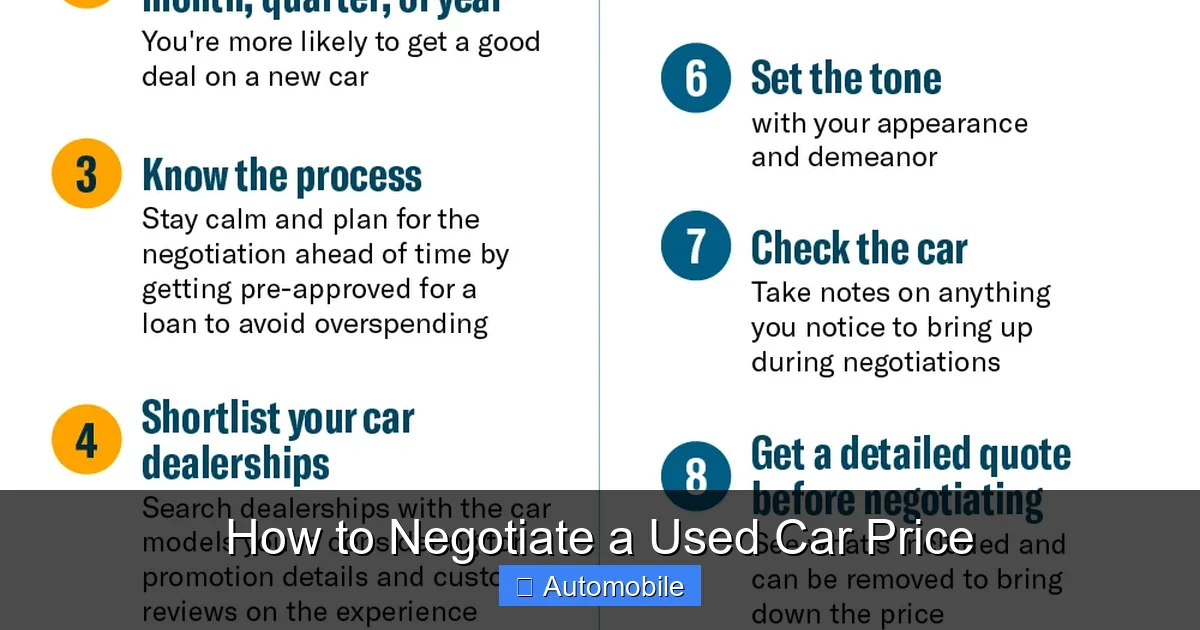
Visual guide about How to Negotiate a Used Car Price
Image source: endurancewarranty.com
Once you’ve done your research, it’s time to get yourself ready for the actual engagement. These steps will strengthen your hand immensely when you go to negotiate a used car price.
Get Your Financing in Order First
This is huge. Walking into a dealership with pre-approved financing from your bank or credit union gives you incredible power.
- Know Your Rate: You’ll know exactly what interest rate you qualify for.
- Cash Buyer Power: You’re essentially a cash buyer from the dealer’s perspective, as they know you have the funds. This removes the “let’s talk about monthly payments” trap, which dealers love to use.
- Separate Negotiations: You can negotiate the car’s price purely, without worrying about loan terms. If the dealer offers a better interest rate, great, but you have a fallback.
Arrange a Pre-Purchase Inspection (PPI)
Never, ever skip this, especially when buying from a private seller or a small, independent lot.
- Independent Mechanic: Find a trusted, independent mechanic (not one affiliated with the seller) to perform a thorough inspection. They’ll check everything from the engine and transmission to the brakes and suspension.
- Hidden Issues: A PPI can uncover problems that aren’t immediately obvious, such as fluid leaks, worn parts, or potential major repairs needed down the road.
- Negotiation Leverage: If the mechanic finds legitimate issues, you now have strong evidence to negotiate a lower price or ask the seller to make repairs before you buy.
Understand Trade-Ins (Separate Negotiation)
If you have a car to trade in, treat it as a separate transaction.
- Get Your Trade-In Valued: Just like the car you want to buy, research your current car’s trade-in value using KBB or Edmunds.
- Negotiate Separately: When you’re ready to negotiate, focus on getting a firm price for the car you’re buying first. Only after you’ve agreed on that price should you introduce your trade-in. Otherwise, dealers can “play with the numbers,” giving you a good trade-in value while inflating the price of the car you’re buying.
Prepare Your “Walk-Away” Point
This is the single most important mindset shift. Be emotionally prepared to walk away from any deal that doesn’t meet your criteria or budget. There will always be another car. Your willingness to walk away is your ultimate leverage.
Engaging with the Seller: Strategy and Psychology
You’ve done your research and prepared. Now it’s time to interact with the seller. This phase is about gathering more information and maintaining control.
First Contact: Gathering Information, Not Negotiating Yet
Whether it’s an email, phone call, or first visit, your initial goal is to confirm details and set up a viewing.
- Ask Questions: For private sellers, ask about their reason for selling, maintenance history, any known issues, and if the car has been in any accidents. For dealers, confirm availability and exact trim.
- Don’t Negotiate Price Over the Phone/Email: Avoid talking specific numbers until you’ve seen the car in person and had a PPI. You need to assess the car first.
On-Site Inspection: What to Look For
When you see the car, do a thorough visual check.
- Exterior: Look for dents, scratches, rust, mismatched paint (indicating repairs), tire wear (evenness suggests alignment issues), and working lights.
- Interior: Check for tears in upholstery, strange smells, functionality of all buttons and electronics (radio, A/C, power windows, etc.).
- Under the Hood: Look for obvious leaks, frayed belts, corrosion on battery terminals, and general cleanliness (too clean might hide something, too dirty might indicate neglect).
- Bring a Checklist: A simple checklist can help you remember everything to inspect.
The Test Drive: Your Final Assessment
This is crucial. The test drive should be extensive, covering various road conditions.
- Listen and Feel: Pay attention to any strange noises (squeaks, rattles, clunks), vibrations, or pulling to one side.
- Test Everything: Brake hard but safely, accelerate, merge onto a highway, drive at low speeds. Test the air conditioning, heater, cruise control, and all electronics.
- Bring a Friend: A second pair of eyes and ears can catch things you miss and provide emotional support.
Building Rapport (Optional, but Can Help)
Being friendly and respectful doesn’t mean you’re not serious about getting a good deal. Sometimes, a good rapport can make the negotiation smoother, especially with private sellers. Remember, you’re building trust, but not becoming best friends.
The Negotiation Dance: Making Your Offer
This is where you put all your preparation into action. Learning how to negotiate a used car price effectively involves a careful back-and-forth.
Starting Point: How Low to Go?
Your opening offer should be lower than what you expect to pay, but not insulting.
- Based on Research: Use your market research and PPI findings. If KBB suggests a private party value of $10,000 for a car listed at $11,500, and your mechanic found $500 worth of repairs needed, you might start at $9,500-$10,000.
- Give Yourself Room: An initial offer typically ranges from 10-20% below the asking price, especially if the car has been on the market for a while or has minor issues.
- Private vs. Dealer: Private sellers often have more flexibility, but dealers also have more markup. Don’t be afraid to make a strong opening offer.
Justifying Your Offer with Data
When you make an offer, explain *why* it’s that price.
- “Based on my research of similar cars in the area and considering the need for new tires (as noted by my mechanic), I’m prepared to offer $X.”
- This shows you’re not just pulling a number out of thin air. It makes your offer logical and harder to dismiss.
Handling Counteroffers (Don’t Rush, Analyze)
The seller will likely counter your initial offer.
- Don’t Accept the First Counter: Rarely is the first counteroffer the best they can do.
- Re-Evaluate: Take a moment. Review your budget and your walk-away point. If their counter is too high, reiterate your reasons for your offer, perhaps raising your offer slightly in return.
- Small Increments: Move in smaller increments than the seller. If they drop by $500, you might only go up by $200. This slowly closes the gap.
Be Patient and Persistent
Negotiation takes time. Don’t feel rushed or pressured.
- Silence is Golden: After making an offer, sometimes just waiting patiently for their response can be effective. The silence can feel uncomfortable for them, prompting them to speak first.
- Don’t Show All Your Cards: Don’t reveal your maximum budget immediately. Keep your emotions in check.
Addressing Dealer Fees and Add-ons
With dealerships, be vigilant about extra fees.
- “Doc Fees”: These are administrative fees. While some are standard, they vary wildly. Inquire about them early and factor them into your overall “out-the-door” price target. Sometimes they are non-negotiable by law, but you can use them to argue for a lower vehicle price.
- Unnecessary Add-ons: Dealers might try to push extended warranties, paint protection, or VIN etching. Politely decline anything you don’t want or haven’t researched.
Beyond the Price Tag: The Full Deal
Once you’ve agreed on a price, there are still a few crucial steps to ensure a smooth transaction.
Warranty Considerations
For dealership purchases, understand what warranty, if any, comes with the car.
- “As Is” vs. Limited Warranty: Most used cars are sold “as is,” meaning no warranty. If a limited warranty is offered, understand its terms, duration, and what it covers.
- Extended Warranties: Be cautious. Research third-party options if you want one, as dealer-offered extended warranties can be expensive and often have limited coverage.
Understanding Paperwork and Contracts
Never sign anything you haven’t read and understood thoroughly.
- Review Everything: Read the purchase agreement carefully. Ensure the negotiated price, all fees, and any agreed-upon conditions (like repairs) are accurately reflected.
- No Blank Spaces: Make sure there are no blank spaces that could be filled in later.
- Ask Questions: If anything is unclear, ask for an explanation. Don’t be embarrassed.
The Importance of a “No” (Don’t Be Afraid to Walk Away)
You’ve heard it before, and it bears repeating: your strongest card is your ability to walk away. If the seller won’t meet your reasonable offer, if you feel pressured, or if something just doesn’t feel right, leave.
- It’s Okay to Say No: Don’t feel obligated just because you’ve invested time.
- Often Leads to a Better Deal: Sometimes, walking away (or even just indicating you will) will prompt the seller to re-engage with a better offer.
- Empowerment: It keeps you in control and ensures you don’t make a purchase you’ll regret.
Conclusion
Learning how to negotiate a used car price effectively transforms you from a vulnerable buyer into a confident, informed consumer. It’s about preparation, patience, and persistence. By researching market values, understanding vehicle histories, securing your financing, and getting a pre-purchase inspection, you build an unshakeable foundation for negotiation.
Remember to approach the negotiation with data-backed offers, be prepared for counteroffers, and always keep your “walk-away” point firmly in mind. Don’t let emotions drive your decision; let facts and your budget guide you. With these strategies, you’re not just buying a used car; you’re mastering a valuable life skill that will save you money and empower you in future transactions. Go forth, negotiate with confidence, and drive away in your perfect car, knowing you got a fantastic deal!
🎥 Related Video: How to Negotiate A Used Car RIGHT NOW | Don't Buy a Car Until You Watch THIS Video
📺 CarEdge
Here’s why you can negotiate at least 10% off: ⮕ https://caredge.com/guides/used-car-prices-are-crashing/ Get educated on …
Frequently Asked Questions
What is the most crucial step before negotiating a used car price?
The most crucial step is thorough research. Knowing the car’s true market value from multiple sources like KBB and Edmunds, and reviewing its history report, gives you the data-backed confidence needed to make a strong, justifiable offer.
How can I use a pre-purchase inspection (PPI) to my advantage in negotiation?
A PPI can uncover hidden issues or required repairs. If the mechanic identifies problems, you can use these as concrete reasons to negotiate a lower price, subtracting the estimated repair costs from the seller’s asking price.
Is it better to pay cash or finance a used car when negotiating?
Getting pre-approved for financing (which makes you a de facto cash buyer) before you shop is ideal. It allows you to negotiate the car’s price purely without mixing in loan terms, giving you strong leverage and clarity on your budget.
What does “out-the-door price” mean, and why is it important to negotiate this?
The “out-the-door price” is the total cost you pay for the car, including the negotiated vehicle price, sales tax, registration fees, and any dealer documentation fees. Negotiating this total price ensures no hidden fees surprise you at the very end.
Should I negotiate a used car price with emotions or facts?
Always negotiate with facts and data, not emotions. Base your offers on market research, vehicle history reports, and pre-purchase inspection findings. Emotional attachment or desperation will weaken your bargaining position and can lead to overpaying.
What’s the benefit of being willing to walk away from a deal?
Being willing to walk away is your ultimate leverage. It demonstrates that you’re not desperate, that you have a firm budget, and that you won’t settle for an unfair deal. Often, this willingness to disengage can prompt the seller to come back with a better offer.